
Key Takeaways
- Memory care building design must be human-centered and research-informed, focusing on residents’ remaining abilities and addressing the unique needs of those living with brain impairment, all kinds of dementia and the Alzheimer’s disease.
- Thoughtful floor plans with looped corridors, sensory-aware interiors, and secure outdoor spaces directly reduce agitation, wandering risks, and confusion for people living with dementia.
- The Cordwainer exemplifies modern best practices through purpose-built features like a two-story indoor sensory garden, a living moss wall, continuous looping pathways with no dead ends, and activity spaces designed from the ground up for memory care.
- Integrated wayfinding using color, contrast, art, and personalized signage preserves dignity while supporting orientation.
- Unobtrusive safety features are essential in memory care design so that residents retain a sense of freedom.
- Communicating a community’s design strengths clearly (through tours, photography, and web content) helps families understand what sets a purpose-built environment apart from a converted assisted living wing.
Introduction: Why Memory Care Building Design Matters
Nearly 14 million Americans aged 65 and older are expected to live with Alzheimer’s disease by 2050. This is driving growing demand for memory care communities designed around more than just safety. These homes must also support identity, routine, and emotional well-being for residents living with dementia, emphasizing the concept of intentional, purpose-driven spaces.
The field has shifted dramatically from institutional, hospital-like settings toward small-scale, homelike environments that weave architecture, interiors, and programming into a cohesive therapeutic whole. The Cordwainer represents this evolution. Because it was purpose-built from the ground up for memory care (not converted from an assisted living community), every design decision reflects what residents with dementia actually need. This article offers a practical framework for understanding what makes memory care design truly supportive.
Human-Centered, Evidence-Based Memory Care Design
Human-centered design in memory care means tailoring the built environment to residents’ cognitive abilities, sensory needs, and life histories. Rather than designing around deficits, this approach leverages what residents can still do, feel, and remember.
Evidence-based design translates research into concrete design solutions aimed at improving quality of care for older adults in memory care environments.
Research from organizations like the Alzheimer’s Association informs decisions about lighting, noise, scale, and shared spaces. Environment-behavior studies have identified specific design features that support wayfinding and reduce stress.
The move away from medicalized spaces is intentional. Residential finishes, soft furnishings, and familiar domestic objects reduce anxiety by removing institutional cues. At The Cordwainer, designers personalize resident suites with:
- Memory boxes and customizable display areas for personal mementos, allowing residents to showcase meaningful items and form a bond with their living space
- Life-story displays that ease move-in transitions
- Familiar objects that invite positive reminiscence
Creating personalized spaces helps residents feel more at home and can ease their transition into a new environment.
Buildings that are easier to navigate and calmer to live in support residents’ well-being and help staff focus on connection rather than crisis response.
Floor Plans That Support Orientation, Safety, and Routine

The floor plan functions as a silent caregiver, shaping how memory care residents move, socialize, and find their way through daily life.
Looped circulation (circular or figure-eight corridors) allows safe movement without dead ends that trigger frustration. Research shows that a significant portion of people living with dementia engage in wandering behavior, often searching for something familiar or relieving stress. Safety-oriented floor plans do not impose restrictions but instead incorporate concealed structural supports to maintain a homelike environment while enhancing resident safety.
The Cordwainer was designed with this approach at its core. Features include:
- Continuous looping pathways with no dead ends or disorienting barriers
- Centrally located living, dining, and activity spaces
- Clear sightlines to landmarks like the sensory gardens and performance center
- Visual stopping points that reduce disorientation
- Non-slip flooring and minimized trip hazards as standard throughout
Staff work areas allow caregivers to observe residents and exits without dominating the visual field, supporting both safety and dignity.
Effective design for seniors with dementia also minimizes physical and emotional burden, creating an environment that supports comfort and well-being.
Wayfinding, Color, and Contrast: Designing a Built-In Map
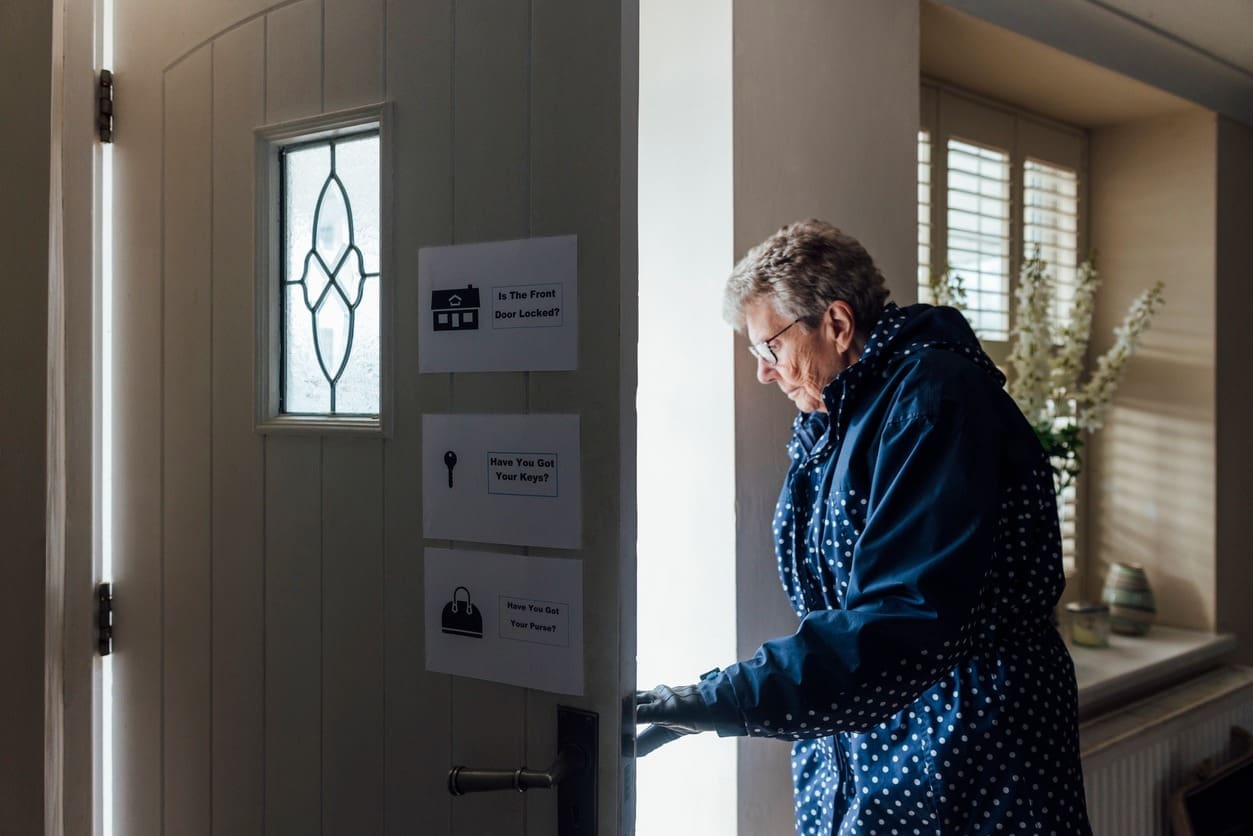
People living with dementia rely more on simple, consistent environmental cues than on abstract signage or room numbers. Visual cues must be layered and redundant.
| Element | Purpose |
| Architectural landmarks | Provide memorable reference points |
| Color-coded neighborhoods | Assign a recognizable identity to different areas |
| Distinctive single-subject art | Support recognition without visual clutter |
| Personalized memory boxes outside suites | Help residents identify their own rooms |
Color carries through flooring, paint, and textiles consistently within each area. High-contrast, calming colors assist with navigation and improve depth perception for residents. Contrast is equally important: darker flooring against lighter walls, contrasted grab bars and toilet seats, and clearly differentiated doors for resident versus staff-only areas.
At The Cordwainer, restricted areas are softened by painting staff doors to blend with walls, while resident destinations are made visually prominent. This gives residents the freedom to explore. Interactive art installations along the looping pathways and the wall-mounted xylophone serve as both engagement points and memorable landmarks, supporting orientation in a way that feels natural rather than institutional.
Creating a Home, not an Institutional Environment
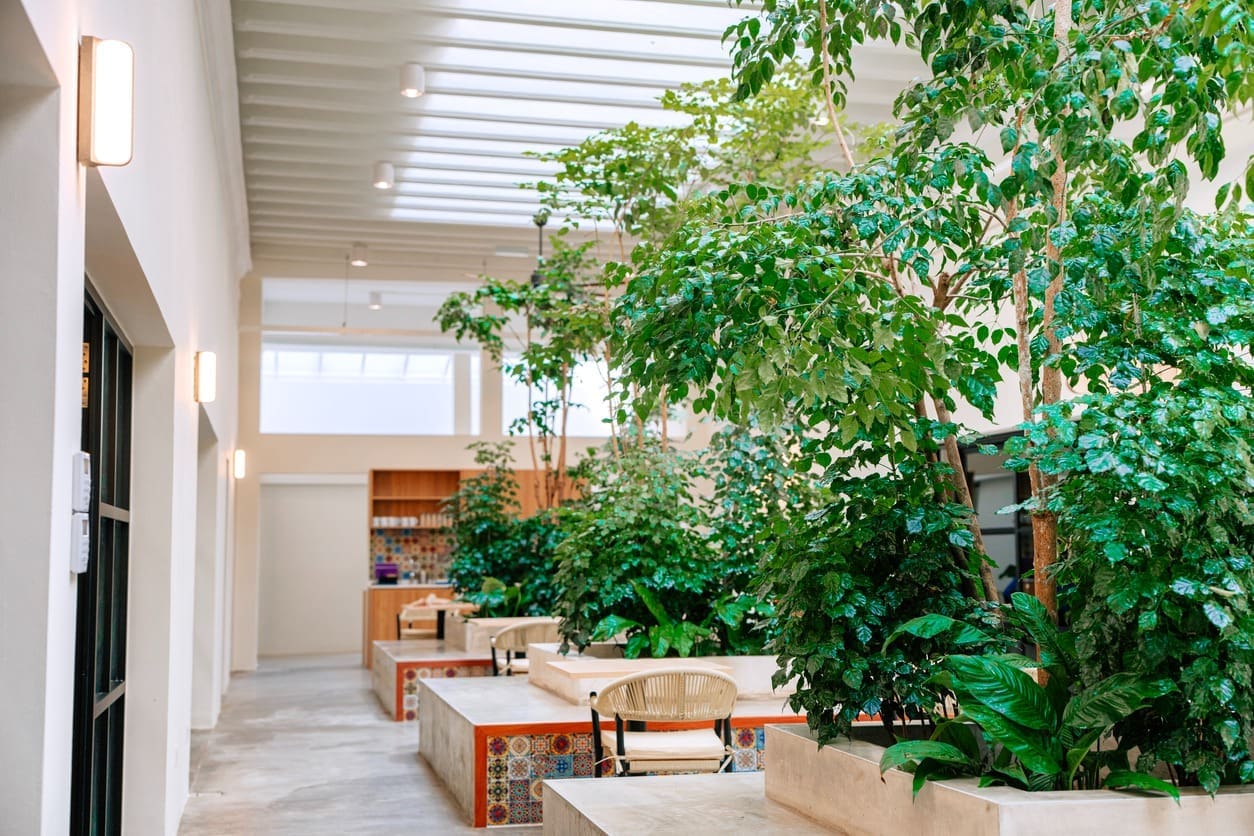
The goal is helping residents feel at home by echoing the domestic architecture of their formative decades (typically the 1950s through 1970s for today’s memory care residents). Homelike decor relies on residential-style furnishings to avoid sterile, hospital-like settings, supporting comfort and emotional well-being.
Homelike design elements include:
- Residential-scale lighting with warm color temperatures
- Upholstered furniture, fireplaces, and bookshelves
- Familiar kitchen areas with recognizable household objects
- Natural materials and warm finishes throughout
The Cordwainer brings this to life with a two-story indoor sensory garden featuring live trees, a skylight, a water feature, and birds chirping, a living moss wall, outdoor sensory gardens, and a performance center where residents gather for music and celebration. A rejuvenation lounge provides a quiet, restorative space for residents at every stage of their journey.
Medical equipment and security systems are concealed within millwork, furniture, or closets. Unobtrusive safety features preserve dignity and freedom for residents, while wander management and related systems remain accessible to staff but invisible to residents, supporting safety. Photography and tours should capture these homelike details rather than medical features, because what families see during a visit shapes their confidence and trust.
Community Spaces: Fostering Connection and Belonging
Community spaces are the heart of memory care communities, providing essential opportunities for residents to connect, engage, and feel a sense of belonging. Thoughtfully designed common areas such as living rooms, activity spaces, and dining spaces encourage social interaction and help reduce isolation. Comfortable seating arrangements, abundant natural light, and inviting décor create an environment where residents feel welcome and at ease.
Secure outdoor spaces, including walking paths and gardens, further enhance the environment by allowing residents to safely enjoy nature and participate in gentle physical activity. These spaces are vital for physical well-being and offer positive distractions that can reduce agitation and anxiety. Community spaces that foster social interaction and connection have a measurable positive effect on residents’ emotional well-being. By creating spaces that support both group activities and quiet reflection, memory care communities help residents maintain a sense of community, purpose, and joy in daily life.
Managing Wandering, Privacy, and Social Connection
Wandering is common and often purposeful. Residents may be searching for something familiar or relieving stress. Design should accommodate this behavior safely rather than restrict it.
Design approaches for safe wandering include:
- Enclosed loop pathways with clear endpoints
- Continuous walking paths that prevent the agitation of dead ends
- Sensory gardens or activity nooks as destinations along the path
- Non-confrontational barriers at exits
- Suite entries that maintain privacy
Design features such as adjustable privacy options and intuitive controls give residents a sense of control over their environment, supporting autonomy and reducing stress.
Thoughtfully scaled community spaces reduce crowding and noise, making social interaction feel manageable rather than overwhelming. Multiple smaller lounges throughout the community let residents choose their level of engagement.
At The Cordwainer, a private family suite allows loved ones to stay overnight or spend extended time with residents, strengthening relationships and giving families a genuine sense of the home.
Healing Gardens and Secure Outdoor Environments

Access to nature functions as medicine. Research documents meaningful reductions in agitation and depression when memory care residents can enjoy nature safely. Providing unrestricted access to secure outdoor spaces can reduce agitation and frustration, relieve stress, and improve physical fitness.
Secure outdoor spaces should feature:
- Continuous walking paths with smooth, non-slip surfaces
- Generous seating and shaded resting spots at regular intervals
- Raised planters, bird feeders, and wind chimes
- Seasonal flowers that invite positive reminiscence
- Unobtrusive fencing screened by landscaping
The Cordwainer’s outdoor sensory gardens are designed to feel like a discovery rather than a secured perimeter. Landscaping screens the fencing naturally, and direct visual connections between indoor lounges and outdoor patios allow residents to transition seamlessly. Purposeful outdoor engagement (light gardening, tending plants, setting outdoor tables) gives residents agency and a sense of contribution. Healing gardens in memory care settings help reduce isolation, depression, and aggressive behaviors in residents with dementia.
Sensory-Aware Interiors: Light, Acoustics, and Positive Distractions
People living with dementia are sensitive to glare, shadows, echoing noise, and clutter. The interior environment should minimize these triggers.
Lighting best practices:
- Abundant natural daylight
- Indirect fixtures that reduce glare
- Warm color temperatures
- Adjustable levels to support residents during sundowning hours
Acoustic strategies:
- Sound-absorbing ceilings
- Soft flooring and carpeted areas
- Upholstered surfaces
- Zoning louder activities away from bedrooms
Positive distractions (art with single, easily recognizable subjects, familiar music, and curated scents like baking bread) enhance well-being while reducing confusion. The Cordwainer’s living moss wall and two-story indoor sensory garden (complete with live trees, a skylight, a water feature, and the sound of birds) are examples of how natural, sensory elements can be built directly into the architecture to create a calming, grounding presence throughout the day.
Spaces for Engagement, Daily Life, and Reminiscence
The building should invite residents into meaningful roles and routines. Passive observation leads to decline; active participation supports ability and a sense of purpose. Thoughtful memory care building design can help address daily obstacles that arise from simple forgetfulness, making routines easier and reducing frustration.
Lifestyle spaces throughout the community include:
- Interactive art installations that invite hands-on engagement
- A wall-mounted xylophone for spontaneous musical expression
- Activity areas tied to familiar household rhythms
- Settings that reflect the life roles residents held for decades
Central, open kitchens where residents can smell food cooking, watch preparation, and participate in simple tasks like table-setting create purposeful engagement. Communal dining rooms encourage residents to eat together, decreasing isolation and boosting nutritional intake. This reflects the principles that inform The Cordwainer’s Learned Environment℠ curriculum, where Music Immersion, Artistic Exploration, and Language Discovery are woven into the physical spaces residents move through every day.
Multipurpose spaces like the performance center host music sessions, creative arts, and small-group gatherings. The building itself becomes part of the program.
Bedrooms and Personal Spaces: Safety Meets Identity

Private suites anchor identity and emotional security. Architectural design should support both.
Suite layouts allow residents to see the bathroom door and ambient light illuminated toilet from their bed, reducing nighttime confusion. Residents are encouraged to bring personal furniture, bedding, and meaningful objects, supporting the feeling of home within a safe environment.
Key features include:
- Built-in headwalls that conceal medical equipment
- Nightlights integrated into baseboards
- Contrasting colors around doorframes and fixtures
- Hallway-side memory displays with photos and names
These elements support recognition and orientation while maintaining the residential warmth that families notice during tours.
Operational Efficiency and Staff Support Through Design
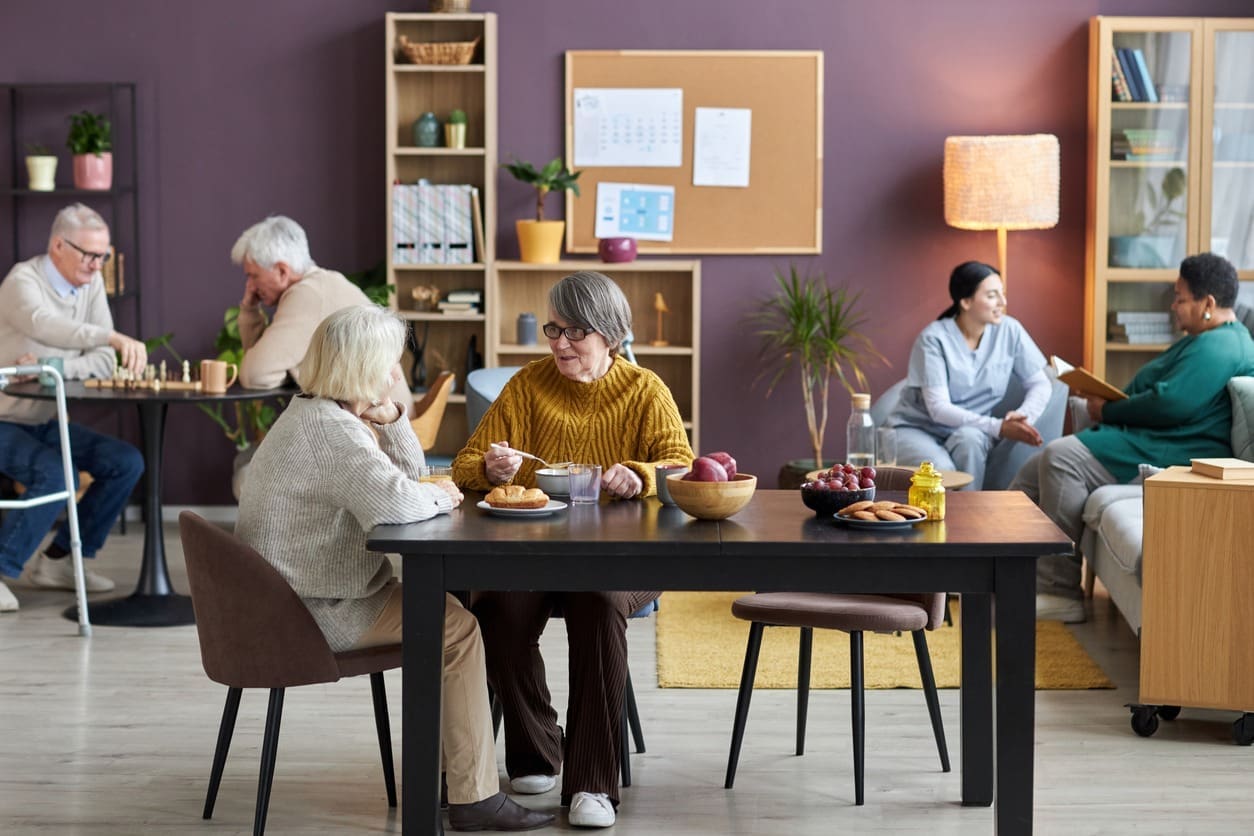
Buildings must enable staff to work safely, efficiently, and compassionately. High turnover in memory care is partly a reflection of poorly designed environments that make an already demanding role unnecessarily difficult.
Design supports staff through:
- Decentralized workstations and supply areas that reduce walking distances
- Clear sightlines from caregiver areas into living rooms, hallways, and exits
- Staff respite areas that acknowledge caregiver well-being
- Integrated lighting controls and alert systems that reduce alarm fatigue
When staff can observe residents easily without invading privacy, both care quality and job satisfaction improve. At The Cordwainer, the family-owned and operated nature of the community (founded by Bodo and Tamilyn Liesenfeld) means these decisions were made with the full picture in mind: what works for residents, for families, and for the people who provide care every day.
Communicating Design Strengths to Families
Memory care communities often under-communicate their building’s design advantages during the family decision process. This is a meaningful missed opportunity, because what families see and feel during a tour shapes their confidence more than any brochure.
Practical ways to communicate design strengths:
- Name specific features during tours (looping pathways, the two-story indoor sensory garden, the living moss wall, the performance center, the rejuvenation lounge) and explain why they matter for residents with dementia
- Use photography and video that captures homelike details rather than medical features
- Create web content that explains why a purpose-built community differs from a converted assisted living wing
- Invite families to experience the environment firsthand, including mealtimes and programming in action
At The Cordwainer, the all-inclusive pricing model means families are not navigating a menu of add-on fees. That transparency, combined with a building designed from the ground up for memory care, gives families a clear and honest picture of what life here looks like. Thoughtfully designed surroundings are what families notice and remember most during tours, as these environments provide comfort, intuitive navigation, and a sense of safety for their loved ones.
Frequently Asked Questions: Memory Care Building Design
How is memory care building design different from standard assisted living?
Memory care communities typically use more controlled common spaces, secure yet open floor plans, stronger wayfinding cues, and higher staff visibility. The entire environment prioritizes orientation, safety, and reduced confusion. Memory care environments are also intentionally designed to replicate the outside world, helping residents engage with familiar settings and activities. A purpose-built memory care community like The Cordwainer goes further: every element of the building was designed with dementia in mind from the start, rather than adapted from a general senior living model.
Can an existing community be renovated into effective memory care?
Yes, strategic updates can meaningfully improve an existing building. Practical improvements include adding looped circulation where possible, securing exits, enhancing wayfinding with contrasting colors, adding memory boxes outside suites, re-zoning lighting, and creating small activity spaces along corridors. That said, purpose-built communities like The Cordwainer carry an inherent advantage: every design decision was made for memory care from the beginning, rather than retrofitted around an existing structure.
What are the most important safety features to prioritize?
Key priorities include secure but non-oppressive exits, anti-slip flooring, safe bathrooms with grab bars and clear sightlines, continuous-loop walking paths, and discreet wander management systems. Safety measures should integrate into residential aesthetics (concealed within millwork and furniture) to avoid triggering institutional anxiety while protecting residents.
What role do sensory and biophilic features play in memory care design?
Sensory and biophilic design elements like living walls, indoor gardens, natural light, and water features have a measurable calming effect. Residents experience reduced agitation, improved mood, and better sleep when nature is woven directly into the environment. The Cordwainer’s two-story indoor sensory garden and living moss wall are examples of how these elements can be integrated architecturally rather than as afterthoughts, supporting residents at every stage of their journey.
Which design improvements offer the most meaningful impact for residents?
High-impact areas include intuitive wayfinding, secure outdoor access with healing gardens, open kitchen and dining concepts, and homelike living spaces with strong sightlines from caregiver areas. Key design elements also include continuous looping walking paths, maximized natural light, and thoughtfully scaled neighborhood layouts. Designing common areas to encourage social interaction while providing quiet areas helps manage stimulation levels. Incorporating natural elements creates a calming atmosphere that supports residents’ emotional needs. A building that feels like a home rather than a medical setting communicates something words alone cannot.