
Key Takeaways
- Structured music therapy can reduce agitation, spark memories, and improve communication for people living with Alzheimer’s and other dementias. Research documents decreased depression and anxiety, and even reduced need for medication in memory care settings.
- Music accesses preserved neural pathways distributed throughout the brain, allowing residents to sing, tap, or recognize melodies even in late stages when language is severely limited.
- Intentional, personalized music programs (well beyond background music) significantly improve quality of life for both memory care residents and caregivers, especially when guided by a trained music therapist.
- Care communities can embed Music Immersion into the daily environment through routine playlists, live sessions, movement, and reminiscence, rather than treating it as a rare special event.
- The Cordwainer’s Learned Environment℠ curriculum weaves Music Immersion, Artistic Exploration, and Language Discovery into every day, helping residents stay engaged, connected, and purposeful.
Introduction: Why Music Belongs at the Heart of Memory Care
Picture this: a resident with advanced dementia, largely nonverbal for months, suddenly hums along to an Elvis Presley track from the 1950s during an afternoon music session. Her eyes brighten. She taps her foot. For a few minutes, she is present in a way her family has not seen in years.
This is not wishful thinking. It is what happens when memory care communities harness the therapeutic benefits of music intentionally.
Alzheimer’s disease affects memory, mood, and communication by progressively damaging the hippocampus and frontal lobes. As the disease progresses, residents lose access to recent memories, struggle with emotional expression, and find conversation increasingly difficult. Non-pharmacological approaches like music are now prioritized in care guidelines across the UK (NICE) and U.S. best practices because they pose fewer side effects than medications that can cause nausea, drowsiness, or sleep disruption.
There is an important difference between playing music in the background and structured music therapy. The latter involves intentional song selection, clear goals (such as reduced agitation or improved engagement), and professional oversight from a music therapist. This guide focuses on practical ways to use music therapy in memory care communities, the underlying brain science in accessible terms, and how communities can position these programs as part of a modern, compassionate dementia care model.
How Music Therapy Supports the Dementia Brain
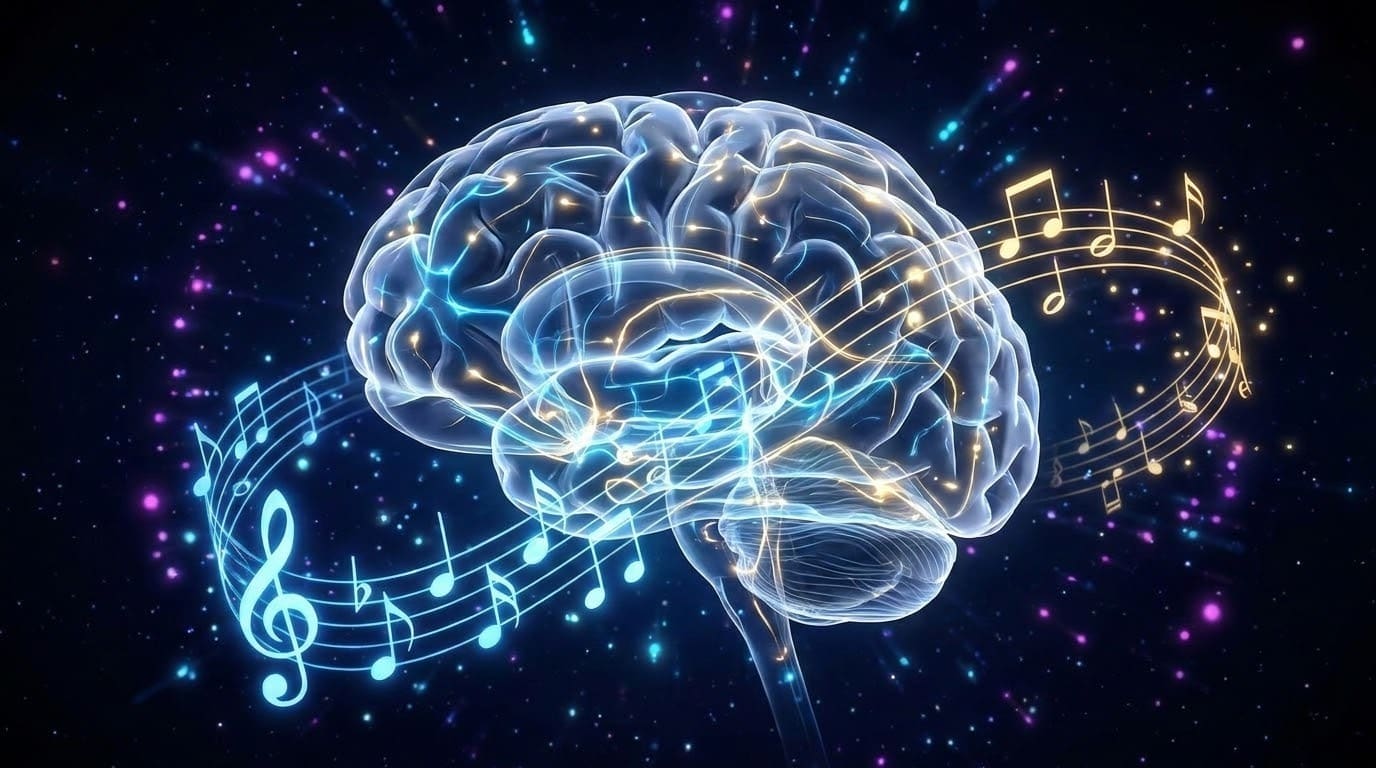
Music engages multiple brain regions simultaneously. The auditory cortex processes sound, the amygdala and limbic system handle emotional response, basal ganglia coordinate motor rhythm, and distributed memory networks store musical memories. Unlike verbal memory (which relies on focal areas vulnerable to Alzheimer’s damage), musical memory is processed throughout the brain.
This explains why residents who cannot recall their children’s names may still sing every word of a hymn from childhood.
Post-2015 research documents meaningful reductions in behavioral challenges in dementia care settings:
| Intervention Type | Observed Outcome |
| Group singing sessions | Outperformed TV and passive listening for quality of life gains |
| Interactive programs (clapping, dancing) | Reduced behavioral symptoms compared to control groups |
| Musical dual-task training (8 sessions) | Improved attention regulation in mild-to-moderate dementia |
Long-term memory from early life (1940s big band standards, religious hymns, Beatles songs from the 1960s) persists into middle and late stages because these memories were encoded robustly during youth. Rhythm also cues movement and speech: residents may walk more steadily to a beat or find words more easily when lyrics are sung.
For daily memory care, this means tailored songs at key times (meals, bathing, evening) can soothe distress and support routine. When a resident hears the same calming track before every shower, the brain begins associating that music with safety and predictability.
Music Immersion in The Learned Environment℠
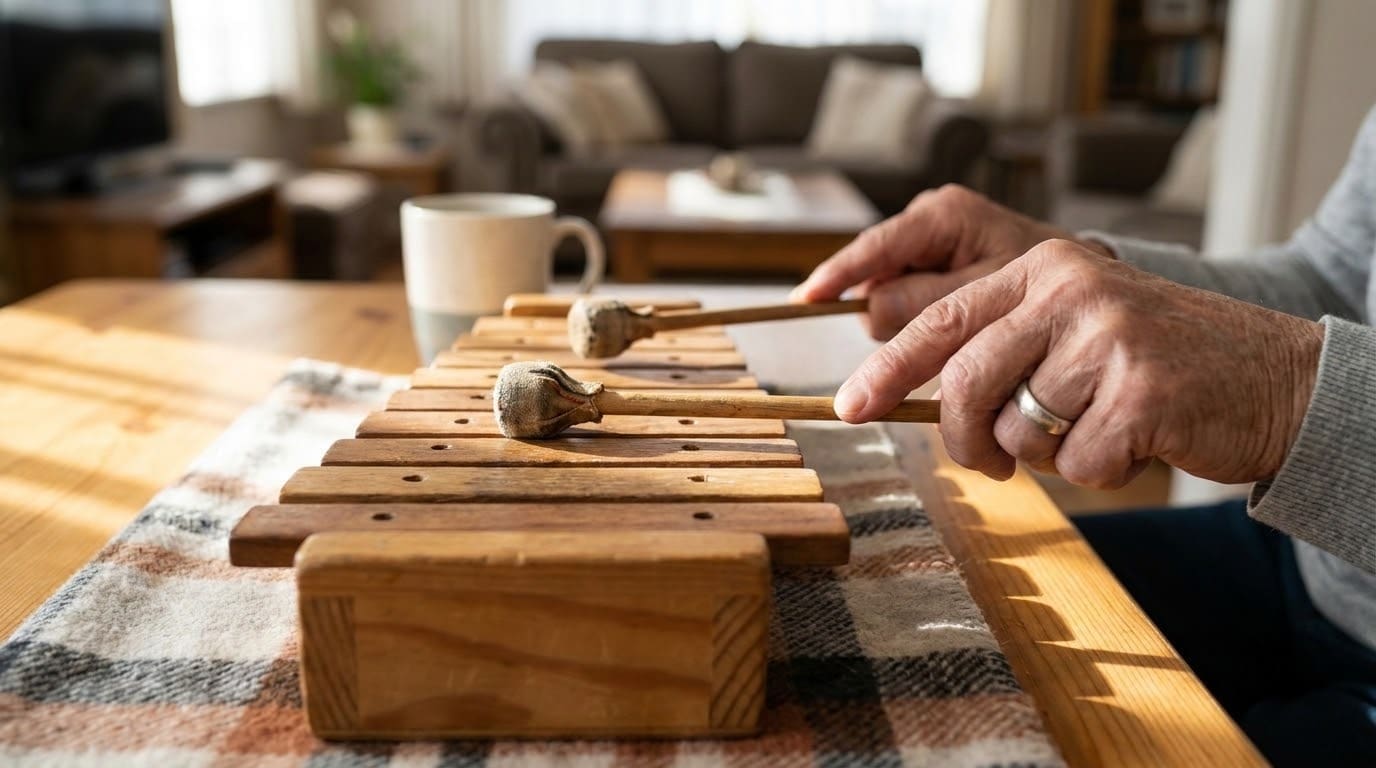
Music Immersion goes well beyond occasional activities. It is a deliberately designed approach in which sound, routine, and familiar songs are woven into daily life.
At The Cordwainer, this philosophy is embedded in the Learned Environment℠ curriculum. The concept is straightforward but powerful: intentionally repeat auditory cues so residents connect specific music with specific moments. The same song plays at breakfast. A consistent playlist marks sundown. Over time, residents learn these associations, finding comfort in the predictability even when short-term memory recall is limited. The community’s performance center and wall-mounted xylophone give residents direct, hands-on access to music throughout the day.
Concrete examples:
- 1950s doo-wop during morning grooming for residents born in the 1930s and 1940s
- Gentle instrumental music during evening wind-down to reduce sundowning and agitation
- Upbeat swing standards before lunch to support appetite and engagement
Environmental details matter for this approach to work:
- Sound levels kept comfortable, with no competing televisions
- Staff trained to pause and observe residents’ responses
- Music available in common rooms and private suites via speakers or headphones
When a music immersion philosophy is explained clearly on a community’s website, during tours, and in digital content, families recognize they are seeing something meaningfully different from generic activities programming.
Core Benefits of Music Therapy in Memory Care
The therapeutic benefits of music in memory care fall into four main areas: emotional support, memory recall, physical engagement, and relationship-building among residents, staff, and families.
Emotional Support
Personalized playlists and live music lower anxiety and reduce episodes of distress. Research shows these benefits are particularly strong during high-stress moments like bathing, medication administration, or room transitions. Families often report visible differences in mood and overall well-being.
Memory Recall
Songs tied to specific eras unlock autobiographical memories. A 1940s wartime ballad might prompt a veteran to share a story he has not told in years. 1960s Motown can bring a smile and gentle swaying. These meaningful moments support conversation even when dates and names are no longer accessible.
Communication
When spoken language fades, music provides a nonverbal bridge. Residents may hum, clap, tap a beat, make eye contact, or complete familiar song lyrics. Staff and families can recognize these as genuine interaction, a form of emotional expression that does not require words.
Physical Engagement
Gentle movement to music supports circulation, flexibility, and balance through swaying in chairs, foot tapping, clapping along, and seated dancing. Rhythmic cues can also improve gait in residents who shuffle or freeze during walking.
Caregiver Well-Being
Shared singing or calm playlists reduce stress for caregivers. Research has found that staff who participate in music therapy sessions develop a deeper understanding of dementia and carry music into ongoing care. Staff feel more connected to residents, and families often notice the warmer atmosphere during visits.
Practical Music Therapy Activities for Memory Care Residents
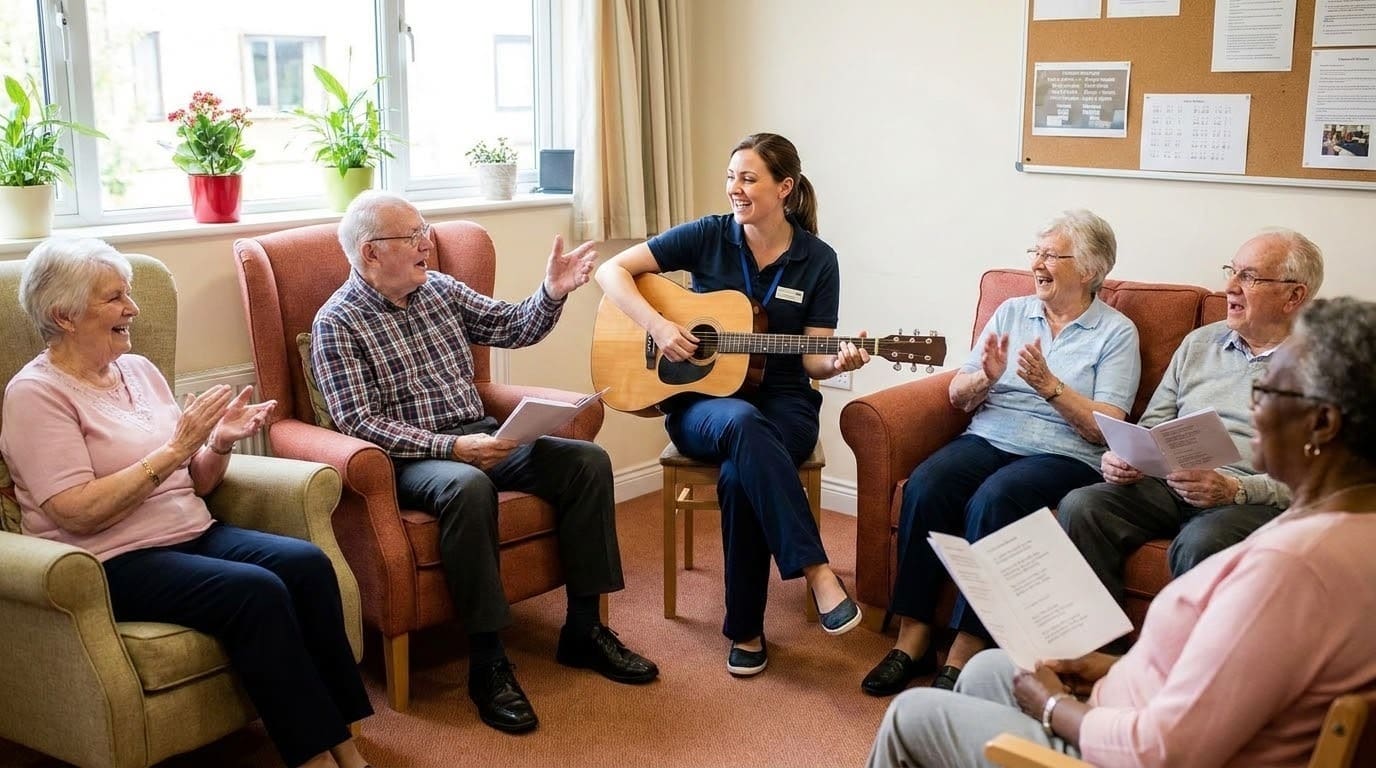
These activities can be facilitated by certified music therapists or adapted by trained activity staff within a memory care program.
Sing-Alongs
Group sessions featuring familiar songs from residents’ young adult years work well. Use large-print lyric sheets and simple call-and-response structures. For residents born in the 1930s to 1950s, this often means Neil Diamond, Frank Sinatra, and classic hymns.
Instrument Exploration
Provide easy-to-play instruments: shakers, hand drums, tambourines, and bells. The Cordwainer’s wall-mounted xylophone invites spontaneous musical play along the looping pathways. Focus on rhythm and sensory engagement rather than musical accuracy. The goal is joy and participation, not performance.
Music and Movement
- Seated dance groups
- Gentle stretching synchronized with tempo
- Simple clapping or tapping sequences
Reminiscence Through Music
Structure “memory hours” where staff play era-specific playlists, pause after each song to invite brief stories, and note meaningful moments for families in care updates.
Personalized Playlists
Build resident-specific playlists using Spotify, Apple Music, or dedicated senior care platforms. Base selections on life history conversations covering childhood, teen years, weddings, military service, and cultural traditions.
Relaxation and Bedtime Routines
Soft, slow-tempo instrumental or vocal tracks chosen with family input support bedtime, sundown periods, and moments that commonly trigger distress. Sessions typically last about an hour, planned with staff and family input.
Working with Professional Music Therapists
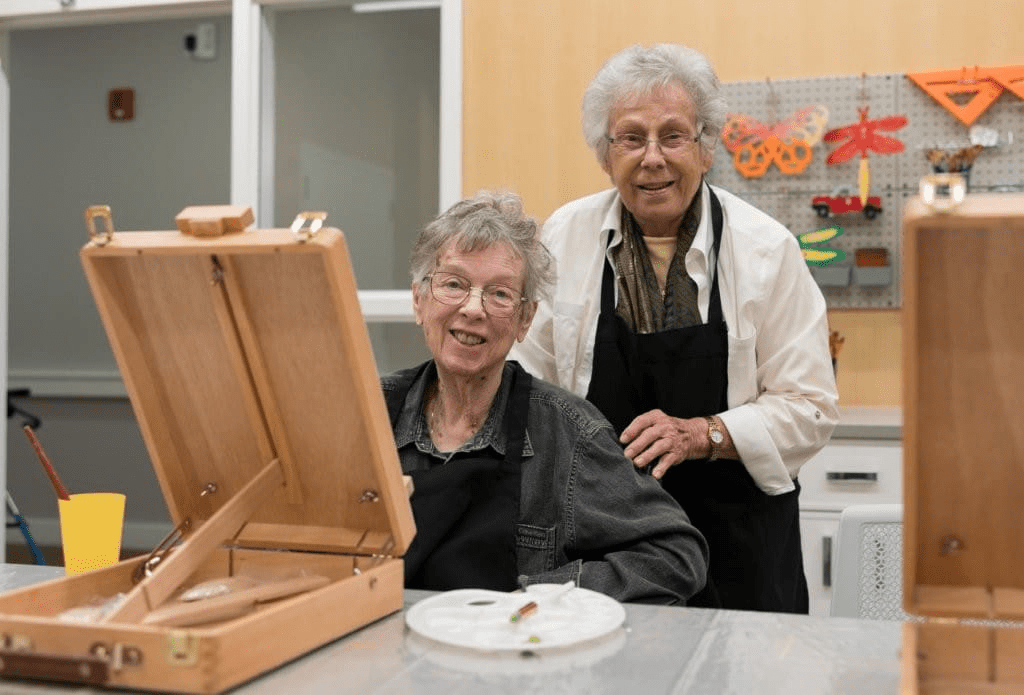
A credentialed music therapist (MT-BC in the U.S., or equivalent in the UK and EU) brings clinical training that general activity staff do not have. The difference matters.
A music therapist conducts assessments that review:
- Medical status and disease progression
- Cognitive abilities and hearing ability
- Cultural background and religious traditions
- Emotional history and past experiences with music
Therapists set specific goals (such as reduced agitation, increased verbalization, or improved participation in daily activities) and measure progress over time. They coordinate with nurses, physicians, and social workers to integrate music into comprehensive care plans. The Cordwainer works with the Berklee College of Music and other sources for music specialists.
| Session Format | Purpose |
| 1:1 singing sessions | Address frequent distress at specific times (such as 4 p.m. sundowning) |
| Small-group drumming | Social connection and sensory engagement |
| Movement circles | Coordination and engagement for mobile residents |
Questions to ask when evaluating therapist providers:
- What credentials and dementia-specific experience do you have?
- How do you track and report progress over time?
- How will sessions integrate with existing care plans?
Showcasing certified music therapy partnerships on a community’s website, brochures, and social media reassures families that programming is evidence-informed rather than superficial.
Designing a Daily Music Care Plan
Here is a step-by-step approach for turning occasional music activities into structured daily programming.
Assessment
Collect each resident’s music life story during intake, covering favorite artists, wedding songs and religious music, cultural traditions, and any songs connected to loss or distress (to avoid).
Scheduling
| Time | Music Type | Purpose |
| Morning | Energizing era-matched playlists | Wake-up, grooming support |
| Pre-meal | Appetite-cueing familiar songs | Transition to dining |
| Bathing | Calming instrumental tracks | Reduce agitation |
| Bedtime | Same 2 to 3 pieces nightly | Consistent wind-down routine |
Staff Training
Simple training modules should teach caregivers how to cue music, observe reactions, and note which songs comfort or distress each resident. This creates a feedback loop that improves care over time.
Technology
Keep implementation simple: CD players, basic MP3 players, or tablet-based playlists with large icons. Consistent labeling and volume controls help maintain quality across shifts.
Family Involvement
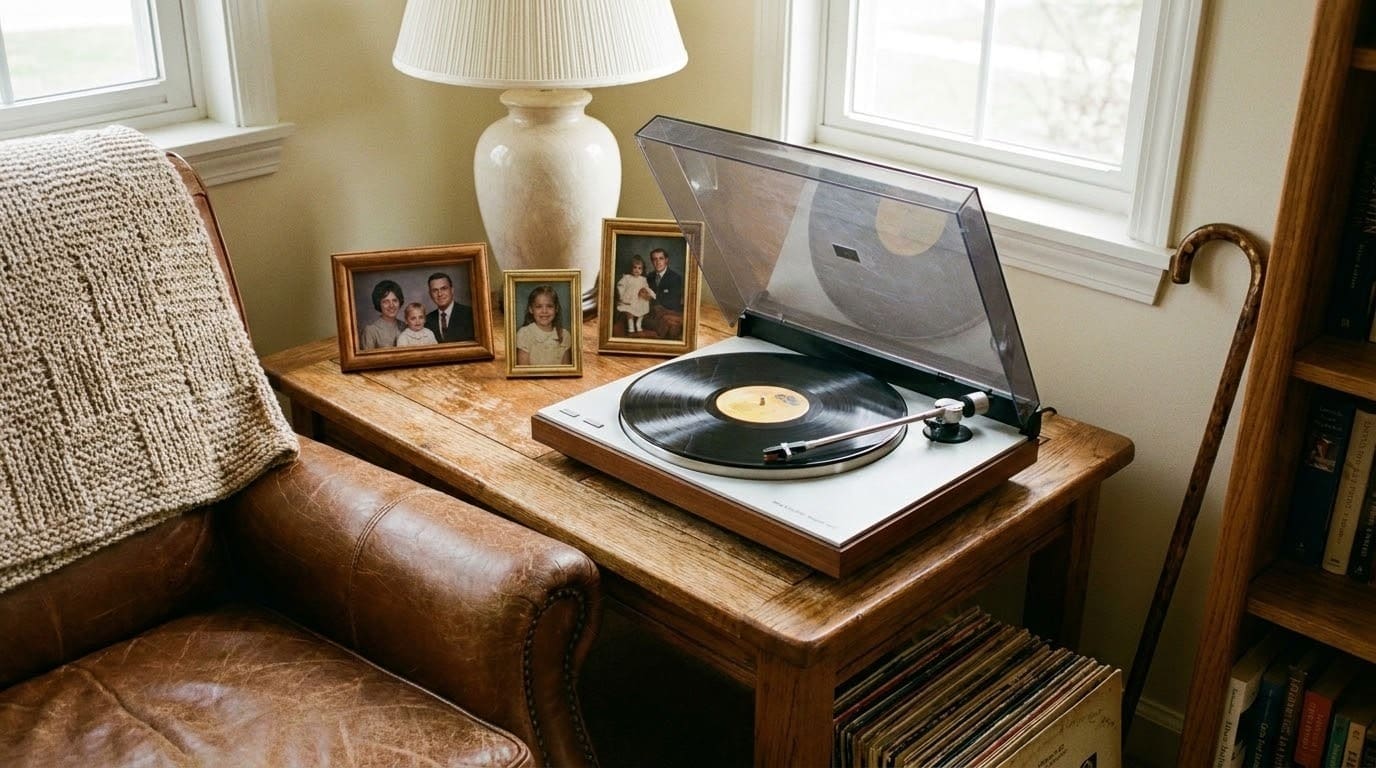
Invite families to contribute playlists, bring in records, or join live sessions during visits. This reinforces connection and continued identity for residents.
Review and Adjust
Care teams should briefly review music responses in monthly meetings and update playlists as needs change with disease progression. What worked in early stages may need adjustment for late-stage Alzheimer’s.
Communicating Your Music Therapy Program to Families
Many memory care communities mention “activities” generically. Few clearly explain how structured music therapy integrates into daily care. This leaves families unable to tell programs apart.
Website Content
Dedicate a specific page to describing your music philosophy, daily routines, photos of actual sessions (with consent), and clear explanations in warm, accessible language.
Storytelling
Share short stories of residents who became calmer or more engaged through music. Change identifying details, but let families visualize outcomes rather than just reading a feature list.
Search Visibility
Families often search phrases like “memory care with music therapy near me” or “Alzheimer’s music program.” Search-optimized content helps your community appear for these intent-rich queries.
Tour Experience
Include Music Immersion elements on tours. Play resident-era music softly, show playlists and activity calendars, and introduce the music therapist if available. Turn an abstract promise into something families can see and hear.
How The Cordwainer Communicates This
The Cordwainer’s Learned Environment℠ curriculum makes Music Immersion a centerpiece of the community’s identity, not a footnote in the activities calendar. Families touring The Cordwainer hear the philosophy, see it in action through the performance center and wall-mounted xylophone, and leave understanding exactly how music is woven into each resident’s day. That clarity builds trust.
Frequently Asked Questions About Memory Care with Music Therapy
Is memory care with music therapy safe for people with advanced dementia?
Music therapy is generally very safe when thoughtfully implemented. However, overstimulation from loud volumes or complex arrangements can sometimes increase agitation in sensitive individuals. Use moderate volume and simple arrangements. Observe each person’s responses: if a specific song triggers visible distress, remove it from that resident’s playlist. Certified music therapists are trained to adapt sessions in real time based on cues like facial expression, breathing, and posture.
How much does music therapy typically cost in a memory care community?
Costs vary by region, therapist credentials, and session frequency. Music therapy is often bundled into overall monthly care fees rather than billed separately. Some communities contract part-time therapists for weekly or biweekly sessions; others employ them directly. Ask during tours about frequency and whether programming is included in base rates. At The Cordwainer, the all-inclusive pricing model means families know exactly what to expect with no hidden add-ons.
Can families use music therapy techniques at home before moving to memory care?
Yes. Many principles (personalized playlists, consistent music routines for bathing or bedtime, quiet sing-alongs) can be used at home without special equipment. Start by listing favorite songs from the person’s teens and twenties. Test small sets at calm times of day. Avoid music associated with loss or distress. Consult with a local music therapist or memory clinic for personalized guidance, especially if the person has strong emotional reactions.
What if my loved one doesn’t seem to like music or never listened much when younger?
Preferences can shift, and even people who were not avid music fans may respond to gentle, predictable music like soft piano, hymns, or nature-inspired instrumentals. Experiment gradually with different genres and eras. Watch for subtle signs of enjoyment: relaxed shoulders, smoother breathing, increased eye contact. For some residents, other creative approaches within the Learned Environment℠ curriculum (visual art, touch, language activities) may resonate more. A person-centered approach should always guide decisions.
How can memory care communities start promoting their music therapy programs more effectively?
Audit current materials (website, brochures, social profiles) to identify where music therapy is mentioned only briefly. Add richer explanations, photos, and resident stories. Create search-optimized content around terms families use, such as “music therapy for Alzheimer’s” or “memory care with music.” Clear, authentic storytelling about the Learned Environment℠ and Music Immersion helps families find communities that genuinely offer this level of programming.