
Families across Boston’s South Shore often feel the weight of care decisions when a loved one is living with dementia. The search for trusted, local options that truly understand Alzheimer’s disease and related dementias leads many families to The Cordwainer in Norwell, MA. This memory care community was designed from the ground up to serve South Shore seniors living with memory impairment, not as a generic senior living add-on but as a dedicated, purpose-built environment. Families searching for memory care on the South Shore want more than just a place. They want an environment that understands dementia from the ground up.
Key Takeaways
- The Cordwainer is a South Shore memory care community in Norwell, MA, built exclusively for residents with Alzheimer’s disease and other dementias. It is not a retrofitted memory wing within a larger senior living community.
- The South Shore setting offers a peaceful environment with wooded surroundings, proximity to Route 3, South Shore Hospital, and coastal towns, providing convenient access for family members while supporting calmer routines for residents.
- The Cordwainer’s Learned Environment℠ curriculum provides structured, research-informed cognitive engagement through Music Immersion, Artistic Exploration, and Language Discovery, tailored to each resident’s unique history and abilities.
- Trained staff provide 24/7 support with dementia-specific expertise, secure building design, and consistent communication with families to support peace of mind.
- Schedule a tour, attend an information session, or speak with The Cordwainer’s care team to explore current availability and memory care options for your family.
Understanding Dementia Care Needs for South Shore Families

Caring for a loved one with Alzheimer’s or other dementias in South Shore communities like Norwell, Hingham, Scituate, Hanover, Weymouth, Marshfield, Duxbury, and Plymouth presents unique challenges. Adult children often balance demanding careers in Boston or across the South Shore while managing caregiving responsibilities at home.
The progression of dementia unfolds in practical, life-altering ways:
- Increasing confusion about time, place, and familiar faces
- Nighttime wandering and sleep disruption
- Personality changes and mood shifts
- Difficulty with medication management and daily activities
- Safety concerns around household tasks and leaving the home unsupervised
The emotional load on caregivers compounds these challenges. Many family members experience uncertainty about next steps, concern about safety, and the exhaustion of constant vigilance. Specialized memory care offers a path toward greater support for everyone involved.
Memory care exists on a continuum, from home care services and adult day programs to dedicated memory care communities like The Cordwainer. Healthcare needs often intensify within 6 to 24 months after early symptoms appear, making early planning an important step.
Why the South Shore Is an Ideal Setting for Memory Care
The South Shore offers therapeutic advantages for memory care that dense urban environments simply cannot match. Coastal air, quieter suburban towns, and access to nature create a calming backdrop for individuals living with dementia while keeping families connected to Boston-area specialists.
Local landmarks provide meaningful reference points and opportunities for supervised outings:
- Wompatuck State Park and Forge Pond Park in Hingham
- Jacobs Pond Conservation Land in Norwell
- The North River and nearby beaches in Scituate, Marshfield, and Duxbury
A quieter setting reduces overstimulation, which is a key factor in supporting comfort and well-being for individuals with dementia. Unlike city environments with constant noise and visual activity, the South Shore’s peaceful surroundings support calmer routines.
Proximity to medical resources remains excellent. South Shore Hospital in Weymouth and Beth Israel Deaconess Plymouth provide access to neurologists, geriatricians, and emergency care when health needs arise. Families also benefit from transportation convenience via Route 3, Route 53, and the Greenbush commuter rail line, allowing adult children working in Boston to visit regularly.
Specialized Memory Care Options on the South Shore
The South Shore offers multiple memory care models, but not every program delivers the same level of specialized support. Understanding the differences helps families make informed decisions.
| Model Type | Description | Considerations |
| In-home care services | Caregivers visit or stay at home | Gaps in coverage; limited supervision |
| Traditional assisted living with memory wing | Shared staff and resources with non-dementia residents | Potentially diluted specialization |
| Skilled nursing with memory care neighborhood | Higher medical acuity focus | Is more institutional |
| Standalone memory care community | Purpose-built for dementia only | Consistent routines; lower overstimulation |
Key elements families should evaluate:
- 24/7 trained staff with dementia-specific expertise
- Secure but homelike environment
- Structured daily programs with cognitive engagement
- Low staff-to-resident ratios
- Track record serving South Shore seniors
The Cordwainer occupies a distinct position as a community built entirely with memory care in mind, not a general senior residence that added a memory wing.
Why South Shore Families Choose The Cordwainer for Specialized Memory Care
The Cordwainer in Norwell, MA serves as a dedicated memory care community exclusively for individuals with Alzheimer’s disease and related dementias. Located near Route 3, it serves families from Hingham, Cohasset, Scituate, Hanover, Marshfield, Duxbury, Weymouth, and neighboring towns.
Founded and operated by Tamilyn and Bodo Liesenfeld, The Cordwainer is family-owned, and that distinction matters deeply to the families who choose it. What sets The Cordwainer apart:
- Dementia-only focus: No independent or traditional assisted living apartments. Every aspect (staff training, programs, and building design) centers entirely on memory care.
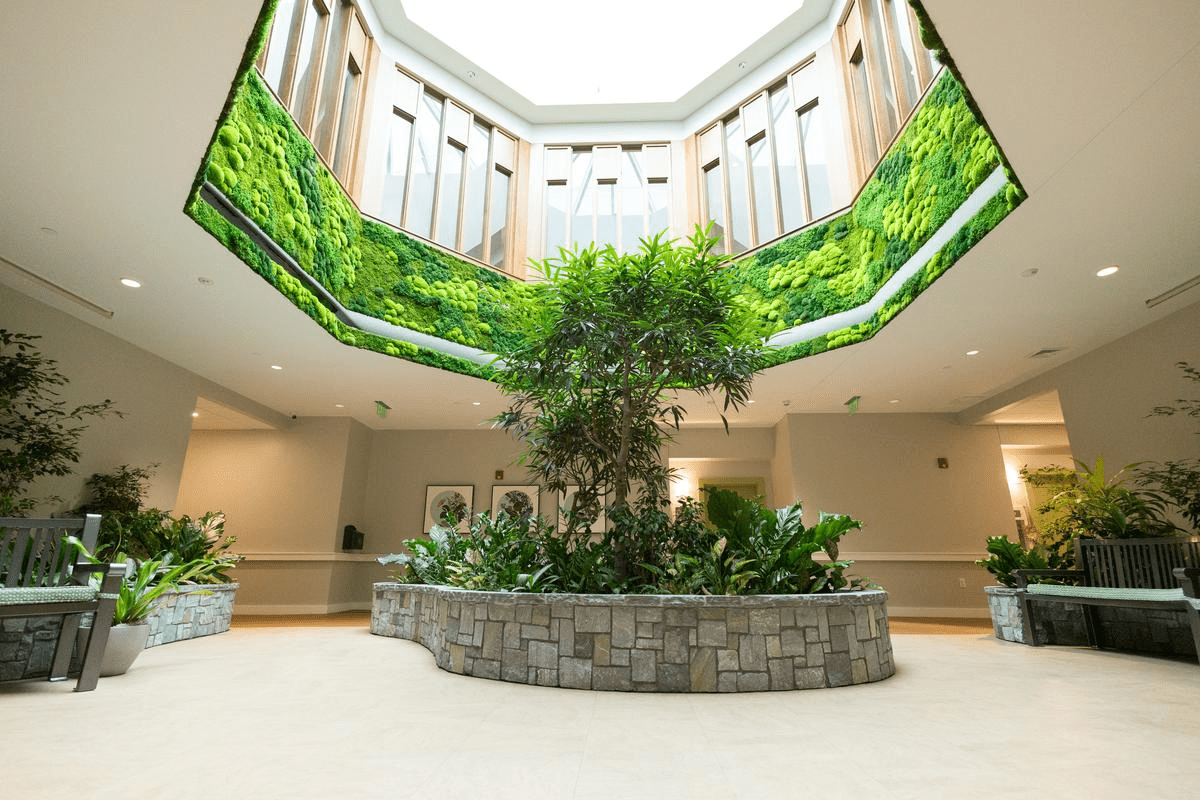
- Purpose-built environment: The building was designed from the ground up for memory care, with a two-story indoor sensory garden featuring live trees, a skylight, a water feature, and birds chirping, a living moss wall, outdoor sensory gardens, interactive art installations, a performance center, a rejuvenation lounge, and looping pathways with no dead ends.
- All-inclusive pricing: One straightforward price with no hidden fees or add-on service charges.
- 24/7 trained staff: Dementia-trained resident care assistants and registered nurses provide clinical oversight around the clock.
- Individualized care plans: Each resident’s unique needs, preferences, and life history inform personalized care approaches.
- Family support built in: A private family suite, caregiver support groups, and ongoing communication are all part of how The Cordwainer reduces isolation for families.
Consider a scenario common to South Shore families: A Hanover spouse has been managing care for a partner at home, but nighttime wandering has escalated beyond what is safely manageable. The transition to The Cordwainer’s structured setting provides relief and safety, allowing the spouse to return to being a family member rather than a full-time caregiver.
Inside The Cordwainer: Environment, Care Team, and Daily Life
A typical day at The Cordwainer begins with calm mornings, familiar faces, and supportive routines. Residents benefit from predictable schedules while the team remains flexible to meet each person where they are on any given day.
The home environment includes:
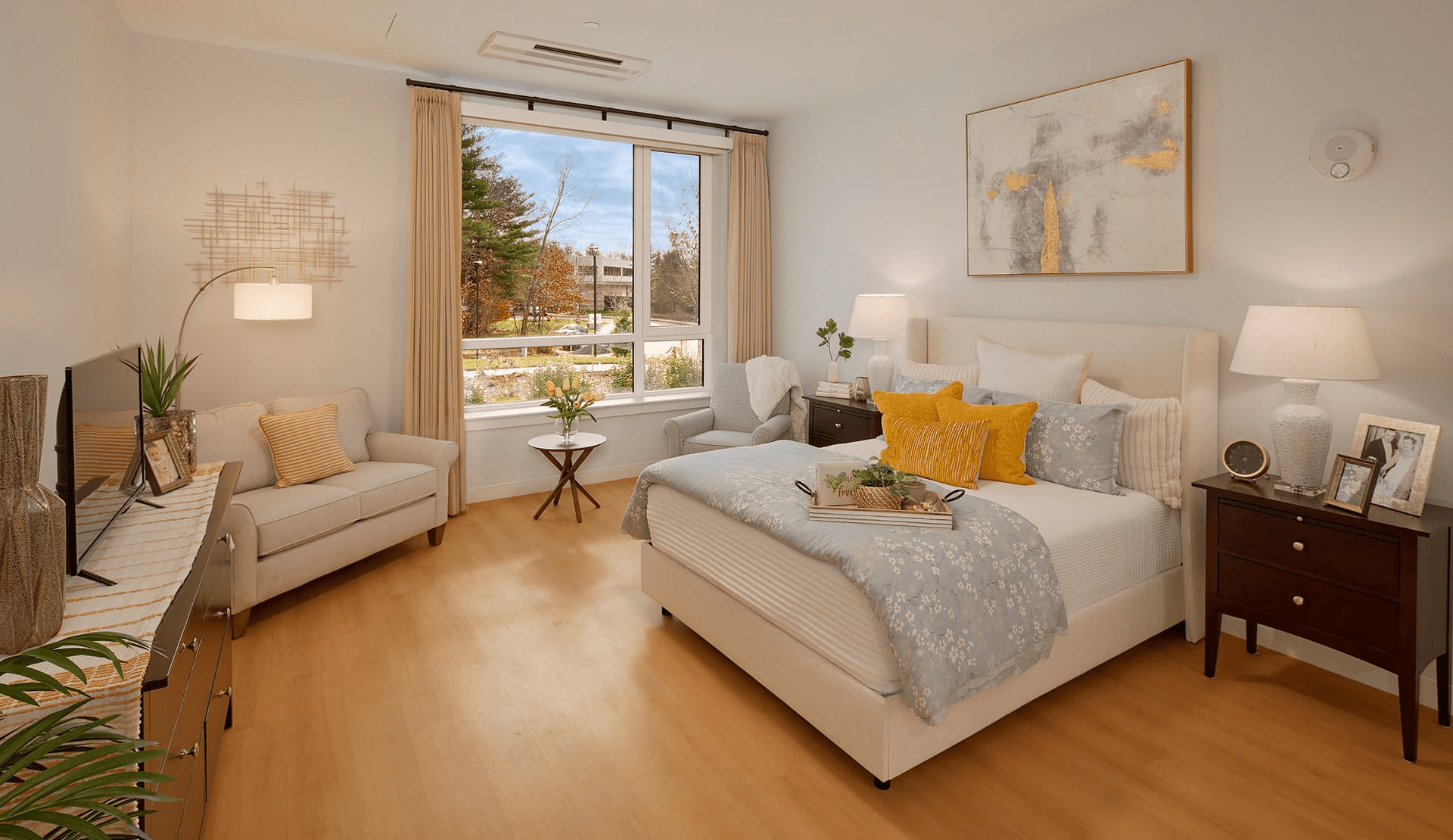
- Private or companion suites designed for comfort
- Secure interior looping pathways for safe walking
- A two-story indoor sensory garden with live trees, skylight, and water feature
- A living moss wall and outdoor sensory gardens
- A performance center, rejuvenation lounge, and interactive art installations
- A private family suite for overnight visits
The care team includes:
- Dementia-trained resident care assistants providing personal care
- Registered nurses and certified dementia practitioners offering clinical oversight
- Life enrichment professionals designing daily activities
- Support staff focused exclusively on Alzheimer’s and other dementias
Care plans develop through an initial assessment period that incorporates family input about life history, preferences, and familiar routines. Regular reviews adjust approaches as dementia progresses, ensuring residents can live with dignity and purpose.
The Learned Environment℠ Curriculum and Cognitive Engagement
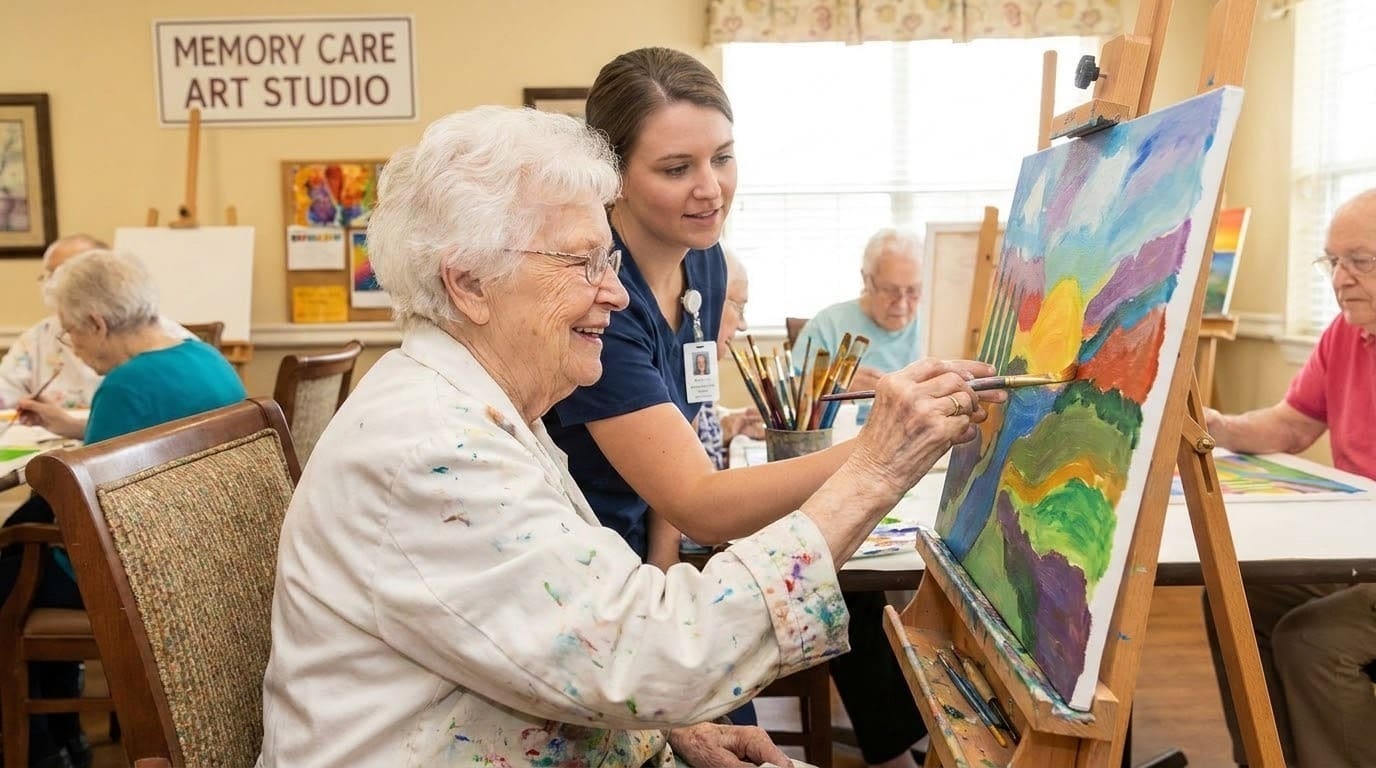
The Cordwainer’s signature Learned Environment℠ curriculum reflects a core belief: the brain never stops being capable of learning, creating, and connecting, even with dementia. This structured, research-informed program provides cognitive engagement tailored to each resident’s abilities through three pillars.
- Music Immersion: Music appreciation and music-based sessions rooted in each resident’s personal history
- Artistic Exploration: Art workshops and hands-on creative work that invite expression
- Language Discovery: Word games, reading activities, and language engagement adapted to varied ability levels
Programming is woven through residents’ personal histories. A retired teacher’s love of books might shape reading activities; a former musician’s connection to certain songs becomes part of music engagement. These threads help residents participate meaningfully while maintaining their sense of identity.
Families and staff have observed regaining seemingly lost capabilities, improvements in mood, social re-engagement, and a renewed sense of purpose among residents who participate in the Learned Environment℠ curriculum. Respite stay guests also participate, allowing short-term visitors to benefit from the same programming.
Family Collaboration, Communication, and Respite Support
Dementia affects the whole family, not just the individual resident. The Cordwainer’s approach deliberately includes family members as ongoing partners in care.
Communication touchpoints include:
- Pre-move-in meetings to discuss expectations and life history
- Care plan conferences every 6 to 12 months, or as needed
- Regular phone or email updates on daily life and changes
- In-person visits during visiting hours and family events
- Support groups for caregivers to reduce isolation
Respite care options provide short-term stays ranging from a few days to several weeks. This supports caregivers during vacations, medical appointments, or when additional rest is needed. Respite stays also serve as a gentle introduction, giving families a chance to experience The Cordwainer before considering a long-term move.
Interested in respite availability during holidays or summer travel? Reach out to The Cordwainer’s team to discuss upcoming openings.
Planning for Memory Care on the South Shore: Practical Considerations
Beyond care quality and environment, families think carefully about timing, logistics, and finances when considering memory care.
Signs it may be time to explore additional support:
- Frequent wandering or exit-seeking behavior
- Increased falls or near-misses
- Caregiver exhaustion affecting health and well-being
- Challenges with safe medication management
- Difficulty managing daily activities and household tasks safely
Memory care costs typically include:
- Monthly care fees based on suite type
- Level-of-care assessments reflecting health needs
- Included services such as meals, activities, and personal care
The Cordwainer’s all-inclusive pricing model means families know what to expect, with no surprise add-on fees.
Common funding sources include:
- Personal savings and retirement income
- Long-term care insurance policies
- Proceeds from selling a South Shore home
- Veterans’ benefits when applicable
- Consultation with local elder law attorneys for Massachusetts-specific guidance
Next steps to make the process manageable:
- Call The Cordwainer to discuss your situation
- Schedule a tour of the community
- Complete a care consultation with the team
- Plan move-in timing thoughtfully to support your loved one’s comfort
Touring The Cordwainer: What South Shore Families Can Expect
A tour is the best way to understand whether The Cordwainer feels like the right home for your loved one. Adult children and spouses from across the South Shore are welcome to visit in person.
What to expect during a visit:
- One-on-one time with the executive director or a community representative
- A guided walk through suites, common areas, and outdoor spaces
- An overview of daily life, care services, and care levels
- Time for questions about your loved one’s specific needs
Tours are available weekdays and weekends, with accommodations for working professionals including early evening and Saturday morning slots. Virtual tours are available for out-of-town family members who cannot visit right away.
Come prepared with questions about:
- Specific behaviors such as sundowning or wandering
- Medical conditions requiring care coordination
- Daily activities and life enrichment programming
Ready to take the next step? Schedule a tour, request an information packet, or speak directly with The Cordwainer’s team about current availability for memory care on the South Shore.
Frequently Asked Questions About Dementia Care South Shore MA
How is The Cordwainer different from a general assisted living community with a wing for dementia care South Shore MA?
The Cordwainer is dedicated exclusively to residents with Alzheimer’s disease and related dementias. Every aspect (staff training, building design, daily programming, and safety protocols) is tailored specifically for memory care. Traditional assisted living communities with a single secured floor share staff and resources with non-dementia residents, which can dilute the depth of specialization. The Cordwainer’s singular focus creates consistent routines, lower overstimulation, and care plans deeply informed by dementia-specific best practices.
Does my loved one need a formal dementia diagnosis to move into The Cordwainer?
While many residents arrive with existing diagnoses from neurologists or primary care physicians, families are encouraged to reach out even when only noticing early memory changes. The Cordwainer’s team collaborates with local South Shore physicians and specialists to review cognitive assessments and determine whether memory care is a good fit. Early planning typically leads to smoother transitions and better long-term outcomes, and having the conversation before a crisis occurs gives families more options.
Can The Cordwainer support residents with complex medical needs in addition to dementia?
The Cordwainer provides assisted living-level memory care and typically manages common co-existing conditions including diabetes, heart disease, mobility challenges, and mild to moderate frailty. The care team coordinates with outside physicians, home health agencies, and hospice providers to maintain continuity. Families with more advanced medical situations should speak with the team directly to determine the best fit.
How often can family visit, and are pets allowed at The Cordwainer?
Family visitation is encouraged and welcomed daily within reasonable hours, with flexibility for out-of-town relatives or special circumstances. Many memory care communities recognize the therapeutic value of pets and may allow family pet visits or offer pet therapy programs. Ask about current visitation guidelines, pet policies, and seasonal family events or support groups hosted on-site.
What is the best way to start the conversation with my loved one about moving to memory care?
Frame the move as getting more support and connection rather than leaving home, focusing on the social opportunities, engaging programs, and added safety. Involving a trusted professional such as a primary care doctor or social worker can help validate the need for added support. Consider a gradual approach: tour The Cordwainer first, explore a short respite stay, then transition to long-term residency once the environment feels familiar. The Cordwainer’s team is experienced in supporting both residents and families through this transition with care and warmth.