
Choosing a memory care community for a loved one with Alzheimer’s disease or other dementias is one of the most consequential decisions a family will make. The right memory care community protects a person’s safety, preserves their dignity, and creates opportunities for connection and purpose. The wrong one can accelerate decline and leave family members feeling helpless. This guide breaks down what to look for, what to ask, and what to avoid when evaluating memory care communities.
Key Takeaways
- Safety, staffing credentials, and dementia-specific programming are the three strongest predictors of quality in a memory care community. Certifications like the Certified Dementia Practitioner (CDP) credential correlate with lower staff turnover: one 2025 industry report found a 4% turnover rate among CDP-credentialed staff, compared to 42% for non-credentialed staff.
- A strong community blends a secure environment, compassionate care, and engaging activities tailored to each resident’s cognitive stage.
- Families should rely on both state licensing data and first-hand family reviews from the last 12 to 24 months when comparing options.
- Some communities offer tiered support across independent living, assisted living, and memory care within the same campus, allowing residents to transition internally. Others are purpose-built, stand-alone memory care communities designed from the ground up for dementia care. Both models can deliver excellent care, so evaluate each on its specific staffing, design, and programming rather than assuming one structure is inherently better.
- Later sections of this article provide specific checklists, questions to ask on tours, and a Q&A to support real-world decision-making.
Understanding What a Memory Care Community Is
A memory care community is a secure, staff-supported residential care setting designed for people living with Alzheimer’s disease and other dementias. It is built to address the specific challenges of cognitive decline, with around-the-clock staff availability, dementia-specific programming, locked or alarmed exits, and trained staff who manage everything from daily routines to behavioral episodes.
Memory care differs from independent living and traditional assisted living in several concrete ways. Independent living offers minimal hands-on support. Assisted living provides help with bathing, dressing, and meals, but may lack secure design features or dementia-focused activities. Memory care goes further: it adds around-the-clock staff support, structured environments to reduce confusion, and staff trained to handle emotional outbursts and wandering.
Over 5 million Americans have Alzheimer’s disease, and by 2026, that number is expected to grow to an estimated 7.2 million Americans age 65 and older. Dementia affects roughly 10 percent of seniors aged 75 and older. These numbers explain why specialized memory care communities exist and continue to expand.
Many modern senior living communities now combine independent living, assisted living, and memory care on one campus, which is one model families may encounter alongside purpose-built, stand-alone memory care communities. On a combined campus, memory care residents may be able to transition internally as needs change, or to stay closer to a spouse who requires a different level of care; stand-alone communities and couples living separately can maintain connection through regular visits and shared activities.
When Memory Care Becomes the Safest Option
Memory care is typically considered when home support or standard assisted living can no longer keep a person safe day-to-day. The threshold is not a single event; it is a pattern.
Concrete signs that a transition may be needed include:
- Frequent wandering or exit-seeking behavior
- Confusion over medication, leading to missed or doubled doses
- Unsafe cooking or kitchen incidents
- Nighttime agitation or sundowning that disrupts sleep for the person and their caregiver
- Recurrent falls
- Getting lost while driving or during routine errands
- Escalating caregiver burnout that affects the caregiver’s own health
Most families benefit from documenting specific incidents over several weeks, including falls, missed medications, and moments of disorientation, before meeting with a neurologist or geriatrician. This record helps clinicians assess severity and guide the conversation about next steps.
Moving to a care community can preserve independence and dignity. Memory care introduces structured routines, professional care, and environmental adaptations for a loved one, rather than simply removing choices from their life. When possible, involve the future resident early in conversations, especially during the early stages of mild cognitive impairment, so they have a voice in the process.
Core Qualities of an Exceptional Memory Care Community
This section serves as an at-a-glance checklist for what exceptional memory care looks like in practice. Use these qualities as the framework for comparison when visiting multiple communities.
- Specialized dementia training for all staff members, not just nurses
- A calm and secure environment that prevents unsafe wandering while allowing freedom of movement
- Predictable daily life rhythms that reduce anxiety and confusion
- Meaningful, engaging activities tailored to each resident’s cognitive stage and interests
- Strong, transparent communication with family members
- Effective use of non-drug approaches to manage dementia-related behaviors, such as redirection, sensory activities, and environmental adjustments
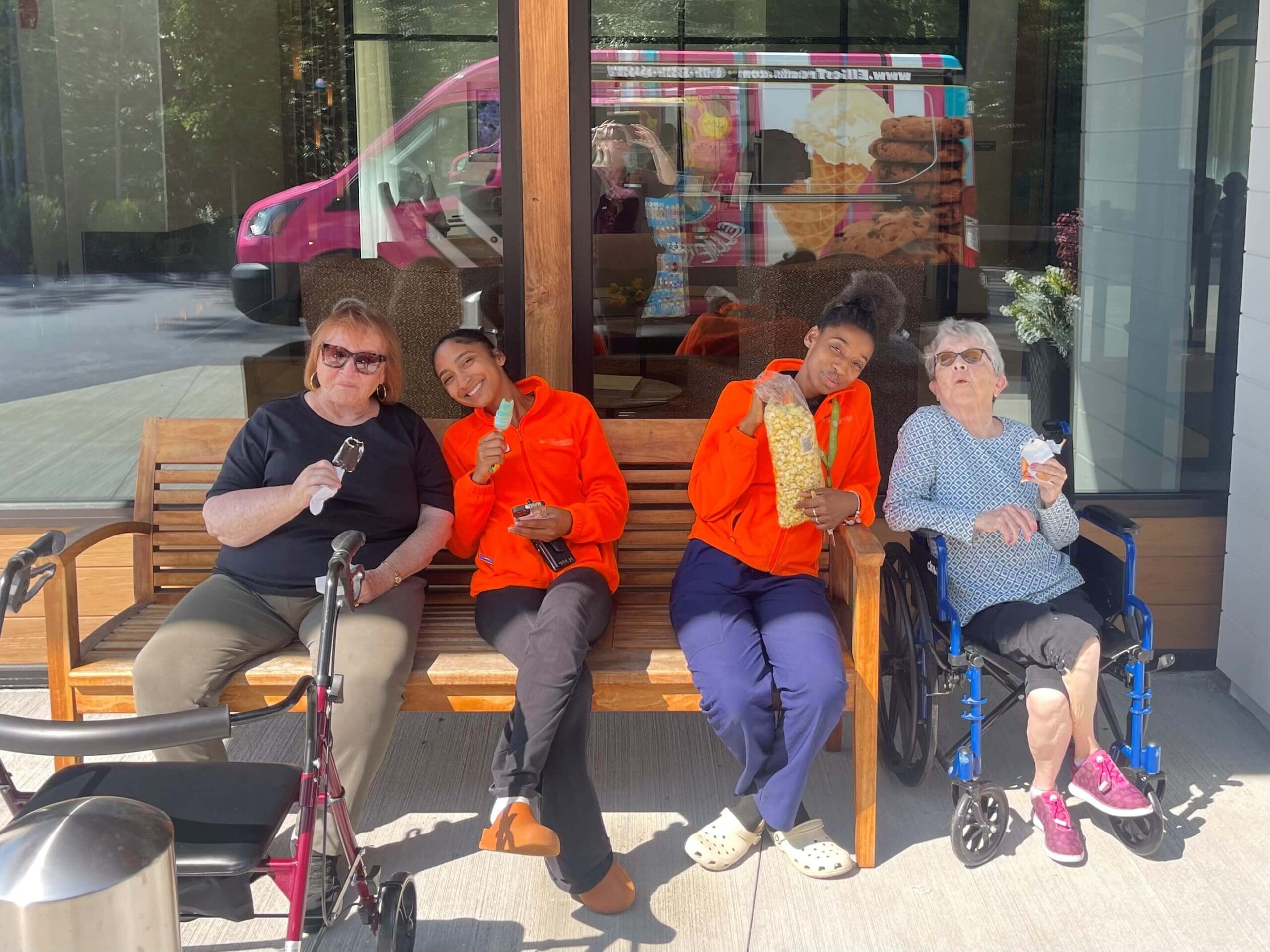
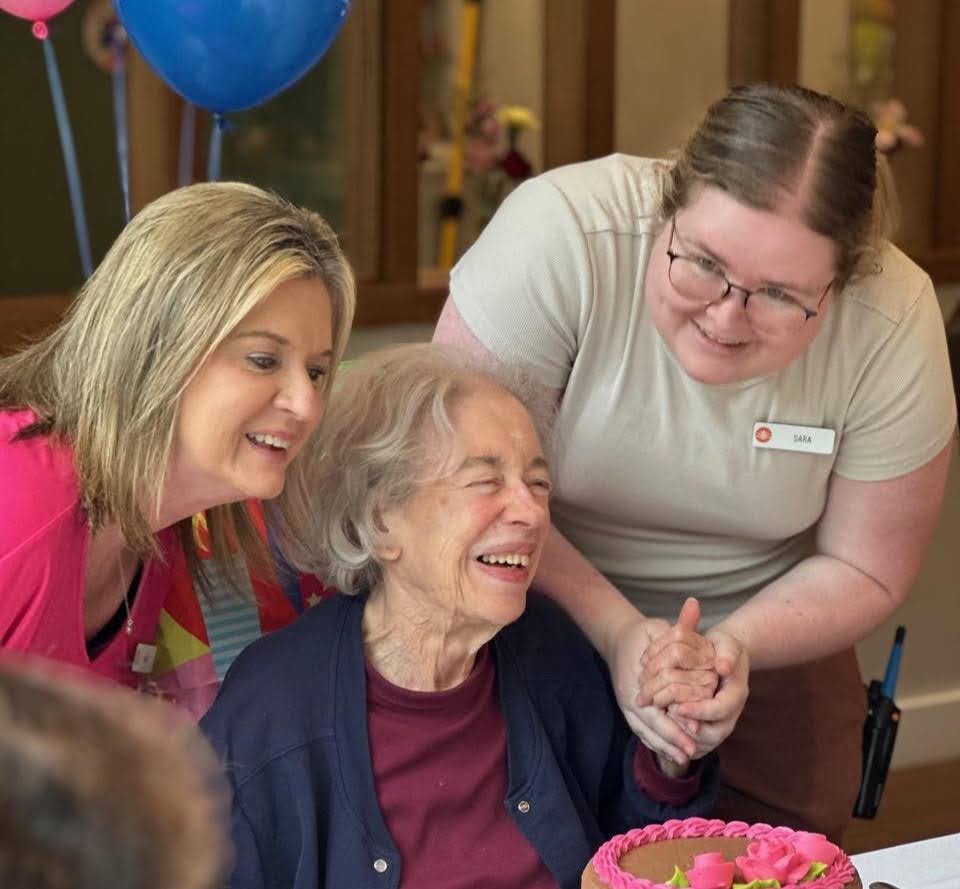
Quality should be visible during a first visit. Look for residents who appear relaxed, clean, and engaged. Listen for staff addressing people by name. Watch for small moments of personalized care: a caregiver adjusting a blanket, sitting at eye level during a conversation, or guiding someone gently rather than pulling.
The best communities treat memory care as a distinct specialty with its own design, staffing, and programming, purpose-built for dementia rather than added on as a wing of a general assisted living building.
Safety, Security, and Building Design
Safety is the first non-negotiable criterion for any memory care community, especially for individuals prone to wandering or confusion about time and place. A safe environment for people living with dementia comes from a combination of architectural design and active monitoring.
Dementia-designed architecture promotes safety and reduces confusion. Look for these concrete design features:
- Secured entrances and exits with alarms that alert staff without startling residents
- Enclosed outdoor areas, such as courtyards and walking paths, where residents can move freely under supervision
- Clear sightlines in hallways so staff can observe multiple areas at once
- Non-slip flooring with a strong contrast between floors and walls to support mobility
- Wayfinding cues like color-coded corridors, artwork at decision points, and memory boxes on doors containing personal items and photographs
Modern communities built or renovated between 2018 and 2026 tend to use “neighborhood” models: smaller units of 6 to 10 residents with household-style kitchens and living rooms, along with looping walking paths that avoid dead-end corridors. These designs reduce agitation and exit-seeking compared to long institutional hallways. This is also why building design matters as much as staffing when you compare communities: a memory care community built from the ground up for dementia, with features like sensory gardens and looping pathways rather than a straight hallway retrofitted with alarms, tends to feel calmer for residents day to day.
A quality community balances protection with autonomy, avoiding a jail-like feel. During both scheduled and unannounced tours, check for working alarms, discreet monitoring systems, and safe access to outdoor spaces. The environment should promote safety without feeling institutional or restrictive.
Staffing: Training, Ratios, and Longevity
Staff members are the heart of compassionate care and often the single biggest predictor of family satisfaction. Specialized training helps staff understand and manage communication difficulties, respond to distress with patience, and use non-pharmacological approaches before resorting to medication.
Training requirements vary by state. Texas requires four hours of dementia-specific orientation plus 12 hours of annual in-service training, including behavior management. California mandates 12 hours of initial dementia care training for new staff, plus 8 hours per year of dementia in-service training. Oregon requires six hours of annual in-service dementia training for direct care staff. Requirements in your state may differ, so ask any community you’re considering what their staff training actually covers.
Why do ratios matter? Memory care communities average about 3.13 nursing staff hours per resident day (HPRD), compared with 2.05 HPRD in standard assisted living, according to Ziegler’s 2025 survey data. Higher ratios mean more hands available for personal care, behavior support, and social interaction. In many quality communities, daytime ratios run about 1:6 to 1:8 (one direct care staff member for every six to eight residents).
Low staff turnover indicates a supportive work environment and continuity of care. The Memory Care Excellence Network’s 2025 report found that communities with CDP-credentialed staff had a 4 percent turnover rate, compared with 42 percent at communities without that credential.
Ask these questions during a tour:
- What is the average tenure of your direct care staff?
- How often do you use agency or temporary staff?
- Does the community have a dedicated dementia program director or nurse?
Observe staff demeanor: tone of voice, patience, whether they stop to greet residents, and how they respond in real time when a resident shows distress.
Personalized Care Plans and Health Care Coordination
Quality dementia care is individualized, not one-size-fits-all. Memory care communities should provide health and wellness strategies that reflect each person’s medical needs, behavioral patterns, and life history.
Before move-in, thorough initial assessments should cover cognitive status (using tools such as the MMSE or MoCA), medical history, behavioral symptoms, physical abilities, and personal preferences, as reported by family members. These assessments form the basis of personalized care plans that are updated at least every 6 to 12 months, or immediately after a health event such as a fall or hospitalization.
Typical care services include:
- Assistance with activities of daily living: bathing, dressing, grooming, continence care
- Medication management overseen by licensed staff
- Monitoring and management of chronic conditions such as diabetes and heart disease
- Access to physical therapists, occupational therapists, and speech therapists
- Dining support to ensure adequate nutrition and hydration
On-site or on-call health care partners are essential. Ask whether the community has visiting physicians, nurse practitioners, or connections to local hospitals and memory clinics. Ask how changes in health (falls, infections, sudden confusion) are communicated and handled, including after-hours response protocols. Also, ask what’s included in the monthly rate versus billed separately. Some communities charge a base rate and then add fees for medication management, personal care, or programming as needs increase, so it’s worth getting a full written breakdown before you compare prices across communities.
Engaging Activities and Daily Life Rhythms
A quality memory care community should feel like a place to live, not just a place to be kept safe. Structured daily routines and activities give each day shape and reduce the anxiety that unstructured time can cause.
Consistent schedules for waking, meal time, activity blocks, and rest help regulate circadian rhythms and lessen sundowning. Some newer communities have installed circadian lighting systems that shift color temperature throughout the day, mimicking natural light patterns.
High-quality activities keep residents engaged rather than simply occupied. Examples by stage:
- Early stages: reminiscence therapy groups, art classes, simple cooking groups, gardening
- Mid stages: music therapy, chair exercise, sensory activities, small group storytelling
- Late stages: one-on-one sensory stimulation, gentle touch, familiar music, quiet companionship
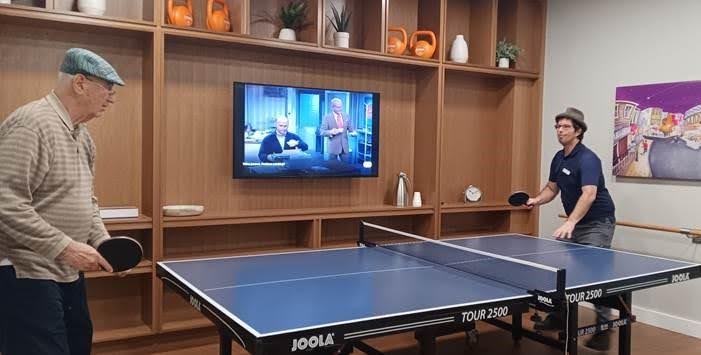
Many communities use reminiscence therapy to help residents connect with long-term memories that remain accessible even as the disease progresses. Meaningful engagement, tailored to each resident’s abilities and interests rather than imposed as mandatory group events, has been associated with mood improvements and greater social re-engagement, not simply time filled. Look for programming built around specific enrichment areas, such as music, art, and language or storytelling, rather than a single generic activity room.
Review posted activity calendars during a visit and observe whether the listed activities are actually happening. A calendar full of events that no one attends is a warning sign, not a selling point.
Environment, Comfort, and Apartment Options
Physical surroundings shape how safe and oriented a person with memory loss feels. The environment should promote safety without feeling institutional, and personal touches make the difference between a nurturing environment and a clinical one.
Modern communities typically offer private studios, companion suites (semi-private rooms shared with one other person), and small households of 6 to 12 residents arranged around a common living area. In a private room, residents have more space for familiar furniture, photographs, and personal items. Families should ask what items they can bring: a favorite recliner, bedding, framed photos, or even a small bookshelf.
Look for noise control (acoustic design that dampens echoes and avoids constant alarm sounds), quality lighting (natural light from windows, avoidance of harsh fluorescents, circadian lighting where available), and cozy common areas, including living rooms, activity rooms, and dining spaces. Personal touches like family photos, familiar music, seasonal decorations, and even living plant walls or gardens signal a homelike atmosphere rather than an institutional one.
Some campuses combine independent living, assisted living, and memory care apartments so couples with different care needs can remain near each other, with social events that include residents from across care levels. This is one of several ways couples maintain connections across different levels of care.
Family Involvement, Communication, and Reviews
Quality communities view families as partners in care, not visitors who show up on weekends. The best communities formalize this through structured communication practices, and some go further with dedicated space for families, such as a private family suite for reunions, celebrations, or extended time together, and support groups that help spouses and adult children process the transition together.
Common communication methods in 2024 through 2026 include family portals or apps with real-time updates, monthly care conferences, regular phone or email updates, and prompt calls after incidents or health changes. Family involvement is not optional in good memory care; it is built into the care model.
Review family reviews from the last two years, focusing on repeated themes around safety, staff turnover, respect, and responsiveness. Reviews that describe specific details, such as staff names, activity descriptions, or how a concern was resolved, are more informative than generic five-star ratings with no detail.
Talk with at least one current resident’s family during a tour, with permission, to get candid impressions about care and how the administration responds to problems. Consistent, transparent communication typically correlates with fewer surprises after move-in.

Regulations, Licensing, and Inspection Reports
Memory care usually operates under state-assisted living or residential care regulations, with additional dementia-care requirements in many states. Some states require separate endorsements or license add-ons for dementia care units.
Families can look up licensing status and inspection reports through their state’s health or social services department website. In Texas, for example, the Health and Human Services Commission publishes inspection results for all licensed providers.
What to look for in reports:
- Repeated medication errors
- Staffing shortages or the use of unqualified staff
- Elopement incidents (one 2026 industry benchmark puts high-performing communities at roughly 0.5 per community per year)
- Substantiated complaints about abuse or neglect
Ask each community for its most recent survey or inspection summary and how any deficiencies were corrected. A long track record with minor, quickly resolved issues is often more reassuring than a spotless but very recent license with little operational history.
Touring and Comparing Memory Care Communities
Visit at least three communities, each at a different time of day, including evenings or weekends, to observe real staffing patterns and routines.
During each tour, observe:
- Smells: persistent urine or cleaning chemical odors indicate problems
- Noise levels: calm conversation or constant alarms?
- Resident engagement: Are people participating in activities, or sitting alone and unattended?
- Cleanliness: look at floors, common bathrooms, and dining areas
- Call light response: time how quickly staff respond when a call light goes on
Bring a written checklist aligned with the sections above (safety, staff training, activities, communication, and cost) to score each community consistently. After each tour, schedule a follow-up call to clarify unanswered questions and request sample activity calendars, menus, and a copy of the most recent inspection report.
Balancing Independent Living, Assisted Living, and Memory Care
Many families encounter “continuum of care” campuses that house independent living, assisted living, and memory care in one location. These campuses allow a person to begin in independent living, receive added assisted living support as needs grow, and then move into secure memory care as dementia progresses.
For couples, this arrangement is one option some families consider: one partner can remain in independent or assisted living while the other lives in memory care, with shared dining or social events arranged at scheduled times.
Ask whether the community can support later-stage dementia, or whether a future move to a skilled nursing facility would be required. Some communities offer on-site hospice care coordination, while others require a transfer. “Aging in place” policies differ widely. Understand the limits on behaviors, mobility decline, or medical complexity before choosing a community, since a community that cannot provide the level of care a skilled nursing facility offers may require a disruptive move later.
Emotional Considerations for Families and Residents
Choosing memory care often involves grief, guilt, and second-guessing for spouses and adult children. These feelings are normal and do not mean the decision is wrong.
Preparing a loved one for the move helps: schedule multiple visits beforehand, set up their room with personal items before move-in day, and maintain familiar routines throughout the transition. Residents feel more at ease when they see their own blanket, photographs, and favorite chair in their new space.
Adjustment timelines typically run 30 to 90 days. During this period, some residents may express anger or confusion, and family members may feel intense guilt. Ongoing visits, phone calls, and participation in care conferences reinforce connection and ease feelings of abandonment for everyone involved.
Families should seek counseling or local dementia support groups for themselves during and after the transition. Caring for a person with dementia does not end when they move to a community; it changes form. Talking with other families in the same situation can bring comfort and reduce isolation.

Red Flags: Signs a Community May Not Offer Quality Memory Care
Use this as a safeguard list during research and tours. Not every memory care community delivers what it promises.
Operational red flags:
- High staff turnover, visible through frequent new faces or heavy reliance on agency staff
- Visibly stressed caregivers who avoid eye contact with residents
- Residents left unattended in hallways or common areas, appearing neglected or distressed
- Strong, persistent odors (urine, cleaning chemicals, stale food)
- Locked doors without a safe, supervised outdoor access
Contractual and administrative red flags:
- Vague pricing with unclear explanations of what fees cover, or a low base rate that turns out to exclude medication management, personal care, or programming
- Reluctance to share inspection reports or licensing details
- Pressure to sign quickly or put down a deposit before a second visit
In family reviews, watch for repeated complaints about medication errors, unexplained injuries, poor communication, or problems that persist over several years without resolution. Memory problems are not an excuse for poor care.
Trust your instincts. If a community feels chaotic or dismissive of questions during a tour, keep looking.
Finding Peace of Mind in the Right Memory Care Community
Finding the right memory care community is a series of small, informed steps, not a single leap of faith. The “right” community is one where residents are known as people, not diagnoses, and where families feel heard and supported. It is a place built to support quality of life, encourage social connection through purposeful programming, promote independence wherever possible, and reduce confusion through thoughtful design.
Approach the search step by step: clarify needs, research, tour, compare, ask follow-up questions, and involve medical and legal advisors when needed. Revisit your decision periodically. As the disease progresses, confirm that the community is still the best fit given changing circumstances and physical abilities.
Seeking exceptional memory care is an act of love, not failure. Informed choices, grounded in the criteria outlined above, can bring peace of mind and support daily life and well-being for both the resident and the family.

Q&A: Common Questions About Quality Memory Care Communities
How is memory care different from a nursing home or skilled nursing facility?
Memory care is usually licensed under state-assisted living regulations and focuses on dementia-friendly housing, engaging activities, and daily personal care support. A skilled nursing facility provides intensive medical and rehabilitative care overseen by nurses around the clock, including wound care, IV medications, and post-surgical recovery. Memory care is residential care with dementia-specific programming; skilled nursing is medical care with 24-hour clinical oversight. Some residents eventually need both, and many communities coordinate transfers when the level of care exceeds what assisted living can safely deliver.
Can someone move from assisted living into memory care without changing communities?
Many modern campuses offer both assisted living and secured memory care on the same property. When a resident’s cognitive decline reaches the point where standard assisted living is no longer safe, the community conducts a new assessment, often with input from family members and physicians, and arranges an internal transfer. This avoids the disruption of moving to an entirely new location and helps the person maintain familiar surroundings and relationships they already have. Ask about this option during your first visit.
What happens if my loved one’s dementia progresses beyond what the community can manage?
Communities outline clinical and behavioral limits in their contracts. If a resident requires 24/7 medical oversight, complex wound care, or interventions that exceed what memory care or assisted living can provide, the community works with the family to arrange a transfer to a higher level of care, such as a skilled nursing facility. Some communities coordinate hospice care on-site to avoid unnecessary transfers in end-of-life situations. Read the discharge criteria in any contract before signing, and ask for specific examples of how the community has managed transitions in the past.
How far in advance should families start planning for memory care?
Begin research one to two years after an early dementia diagnosis, or at the first consistent signs of safety risk. Starting early lets families tour communities calmly, compare options, and make financial plans, rather than scrambling during a crisis. Waitlists at high-quality communities can run several months, and visiting multiple times at different hours gives a clearer picture of daily operations.
Are pets or familiar hobbies still possible in a memory care community?
Some communities allow small pets in residents’ rooms; others offer regular pet therapy visits with trained animals. Staff often adapt long-time hobbies, like music, gardening, or crafts, into simpler, supervised activities that preserve identity and joy. Ask about the community’s pet policy and how the activity team incorporates residents’ personal histories into their programming. These details reveal whether a community practices person-centered care or applies a one-size-fits-all approach.
Every community will describe itself as exceptional. Use the criteria above, and your own eyes and instincts during a tour, to judge for yourself. If you’d like to see how these standards play out in person, we’d welcome the chance to show you around The Cordwainer, our family-owned memory care community in Norwell, Massachusetts, purpose-built from the ground up with looping pathways, sensory gardens, and a living moss wall rather than retrofitted from an assisted living building. Our Learned Environment℠ organizes daily programming around three pillars: Music Immersion, Artistic Exploration, and Language Discovery, and our monthly rate is structured so that medication management, personal care, and programming are broken down and explained in detail as part of the rate rather than billed separately.
Reach out to us to schedule a tour, or visit our Resource Hub if you’re still gathering information and comparing options.