
Key Takeways
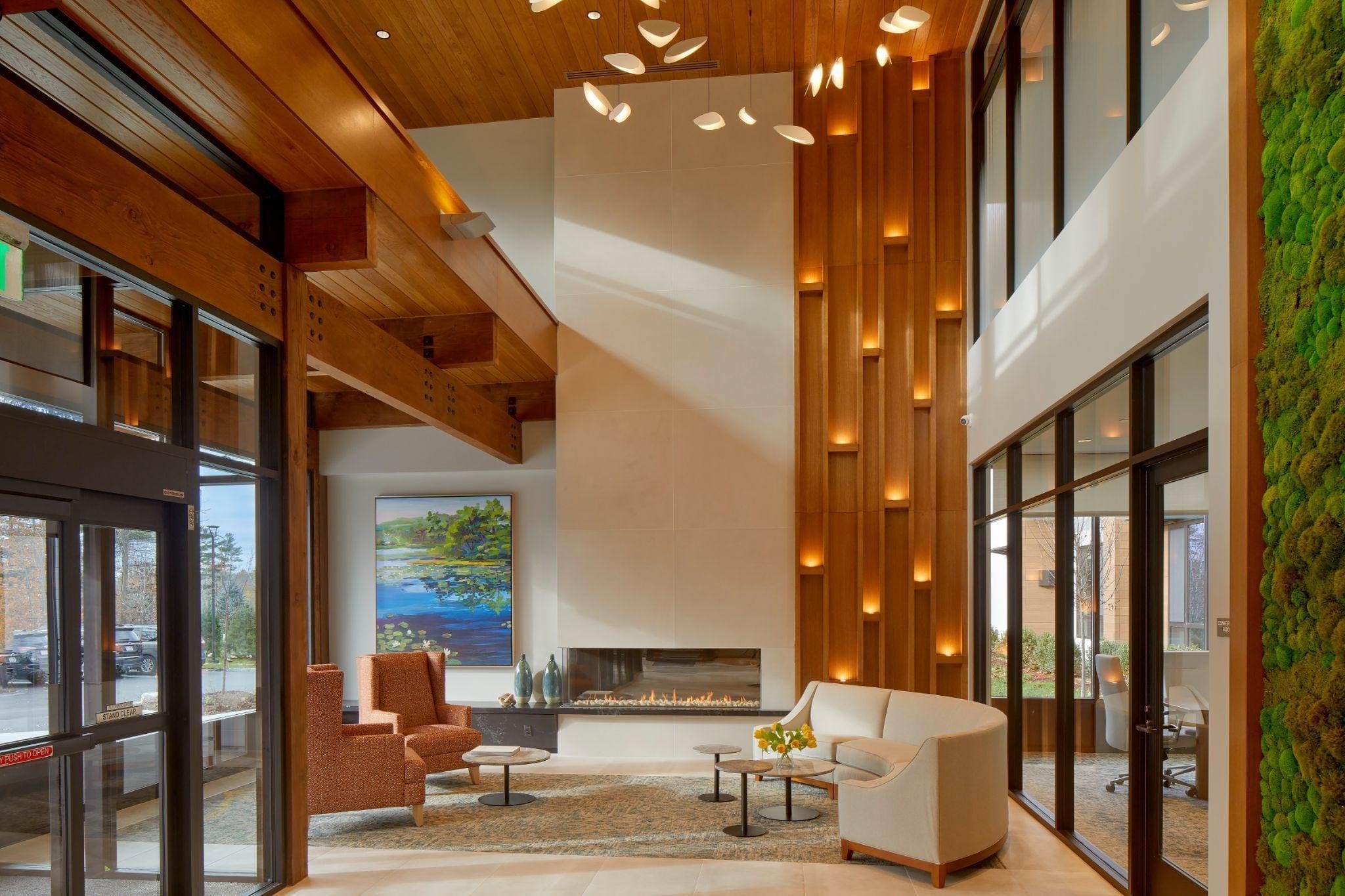
At The Cordwainer, nature-inspired memory care features are used as part of an evidence-based design approach to reduce stress, support orientation, and improve daily life for people living with dementia. In memory care communities, the physical environment plays a role as important as routines, relationships, medication management, and personalized care.
- Environment matters because residents with Alzheimer’s disease and other forms of dementia can become distressed by glare, noise, clutter, and confusing layouts.
- Biophilic design aims to recreate nature’s restorative power in care spaces.
- Natural light, gardens, views, sounds, natural materials, and sensory elements can support sleep patterns, mood, wayfinding, and independence.
- Purpose-built memory care environments can create community spaces that feel homelike while still prioritizing resident safety.
- This guide gives practical design features families can look for when choosing specialized memory care for a loved one.
Introduction: Why Environment Matters in Memory Care
More than 6 million Americans are living with Alzheimer’s disease, and that number is expected to rise sharply by 2050, according to the Alzheimer’s Association. As cognitive decline progresses, residents may struggle to interpret light, sound, distance, signs, and even familiar objects. That makes the surrounding environment more than a backdrop; it becomes a therapeutic tool.
In memory care settings, a calm physical environment can reduce agitation, encourage engagement, and improve quality of life. Nature-inspired memory care design integrates elements of the natural environment into facilities. This design blends indoor spaces with organic patterns and nature views, helping The Cordwainer create spaces that feel calm, familiar, and alive.
Nature-Inspired Memory Care Design: The Big Ideas
Nature-inspired, or biophilic, memory care design brings nature’s light patterns, textures, colors, rhythms, and sensory cues into living spaces and shared spaces. At The Cordwainer, this means using garden-facing lounges, indoor plant features, nature-themed artwork, and common spaces that support residents without feeling clinical.
The main principles are straightforward:
- Safety without an institutional feel
- Consistent connection to outdoor spaces
- Gentle sensory stimulation rather than overload
- Cognitive support that preserves independence
These ideas guide wide choices, such as thoughtful floor plans, secure courtyards, and activity spaces, as well as smaller design elements like fabrics, sounds, scents, and finishes. Research supports that nature exposure is a powerful non-pharmacological approach to managing cognitive decline. Natural elements in design calm the nervous system, and calm environments reduce agitation and confusion in dementia patients.
Floor Plans and Community Spaces Rooted in Nature
Thoughtful floor plans act like silent caregivers. They shape how memory care residents walk, pause, gather, and return to familiar spaces. Circular layouts reduce confusion and promote residents’ independence. Looped circulation paths allow safe wandering without dead ends, while secure outdoor walking paths allow residents with dementia to wander safely.
At The Cordwainer, community spaces are organized in smaller neighborhood-like areas. A sunroom may face a courtyard garden. A living room may frame seasonal trees through large windows. A dining area may open toward a secure terrace where residents can enjoy fresh air.
Clear visual cues help residents identify where they are and where they are going. Visual cues like interactive artwork help residents navigate their environment. Memory boxes outside rooms help residents find their rooms. High-contrast colors improve navigation and reduce confusion for residents, especially around handrails, doorframes, and bathroom elements.
Research on dementia-friendly floor plans has found that looped circulation and fewer confusing decision points can improve wayfinding in memory care facilities.
The Cordwainer Floorplans
Light, Views, and Daily Rhythms
Natural light is central to memory care because it helps regulate circadian rhythms, improves orientation to time of day, and may reduce evening restlessness. Natural light exposure improves sleep and mood in dementia residents. Natural light improves sleep and stabilizes mood.
A strong lighting strategy includes large windows, clerestory glazing, skylights, and glare control. Residents benefit when they can see the sky, trees, weather, and seasonal change from bedrooms, lounges, and dining rooms. During breakfast, brighter daylight can support alertness. In the evening, warmer light and a view of a darkening garden can help signal that the day is winding down.
Sleep disruption is common for people with dementia; one review found that actigraphy may detect sleep disturbance in up to 70% of care-home residents with dementia. Lighting that supports daily rhythm is one practical response to this problem, and current guidance often points to bright daytime light and warmer evening illumination for better sleep patterns.
Healing Gardens and Secure Outdoor Environments
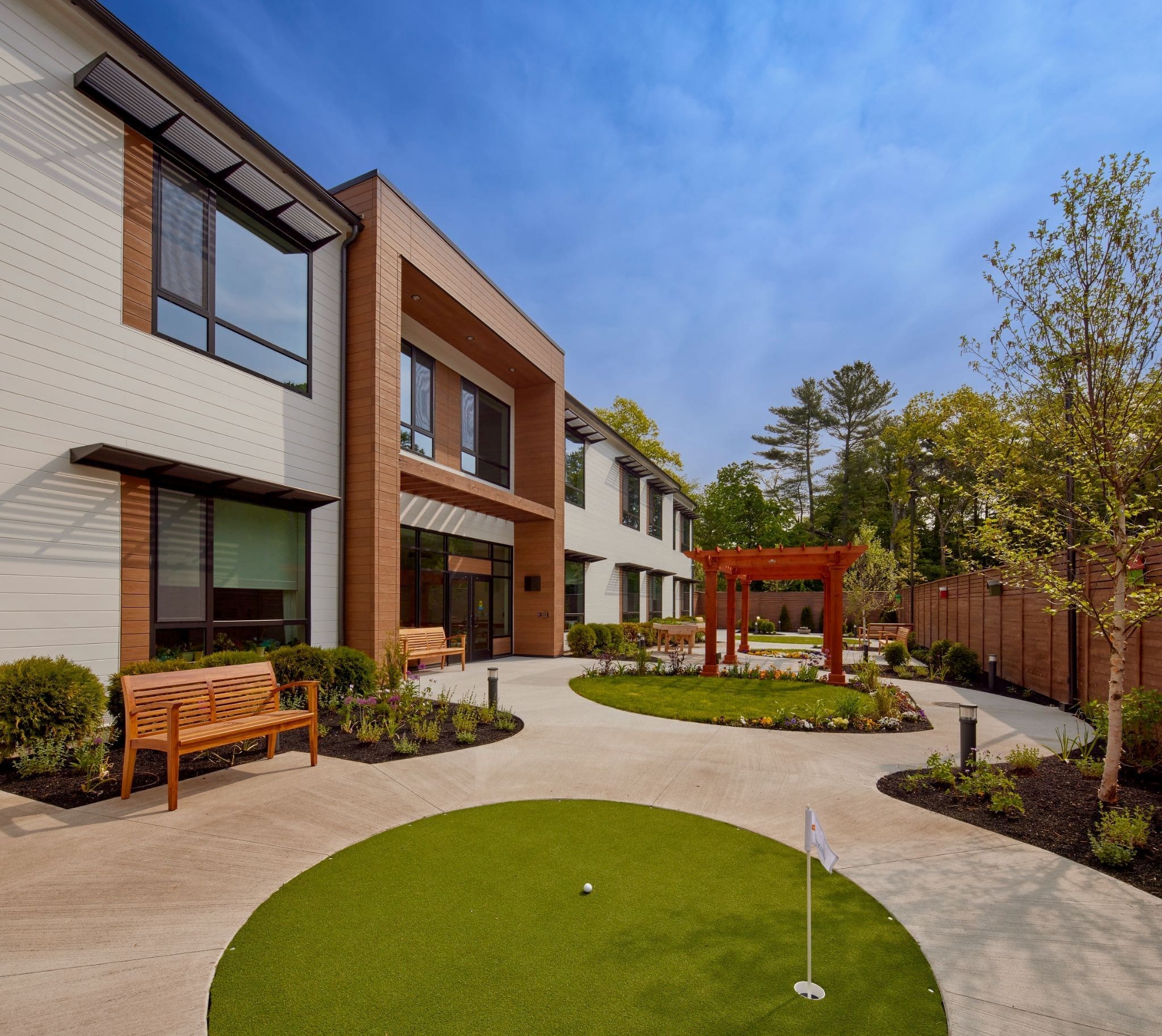
Access to nature reduces agitation and enhances engagement. Secure outdoor spaces improve physical fitness and reduce stress. At The Cordwainer, secure outdoor spaces may include enclosed courtyards, looping walking paths, shaded seating, and places to rest every few yards so residents can move freely without feeling confined.
A good healing garden balances freedom and safety measures. Use of secure fencing in healing gardens enhances safety for residents in outdoor spaces, but landscaping can soften boundaries so residents experience beauty rather than restriction. Raised planters, bird feeders, seasonal flowers, trees, and gentle water features create meaningful sensory engagement. Gardening activities spark joy and positive memories.
Sensory gardens reduce stress and aggression in patients with cognitive impairment. A garden redesign study in a residential aged care setting found improvements in engagement and reductions in agitation after dementia-friendly features such as looped paths, shaded seating, and sensory planting were added. The goal is simple: outdoor access should be part of daily life, not a rare scheduled event.

Sensory-Aware Interiors: Materials, Sound, and Positive Distractions
Dementia can make ordinary environments feel overwhelming. Echoing halls, shiny floors, loud televisions, clutter, and harsh lighting may increase fear or agitation. A supportive interior environment uses natural materials, wood tones, stone accents, natural-fiber fabrics, plant life, and soft furnishings to create a calming atmosphere.
Soft furnishings and warm tones enhance emotional comfort for residents. Acoustic finishes create quieter environments, reducing distress levels. Acoustic finishes reduce noise and create calmer environments for residents. Zoned community spaces also help keep dining, TV, conversation, and quiet areas appropriately scaled.
Color palettes should come from natural landscapes: muted greens, warm earth tones, and soft blues. Using calming color palettes can help maintain residents’ emotional stability. High-contrast colors improve navigation and safety in memory care environments. High-contrast tableware increases food intake in patients with Alzheimer’s disease.
Positive distractions matter, too. Aquariums, indoor planters, low-volume nature soundscapes, large-format landscape photography, and music therapy can give residents something pleasant to notice without overwhelming them.
Creating Spaces for Engagement, Reminiscence, and Daily Life
Nature-inspired design is not only about calm. It also supports purpose, identity, and participation in daily life. Gathering spaces promote social interaction and physical activity among residents. Design elements replicate natural spatial patterns to provide safe observation nooks, so residents can watch activity before choosing to join.
Open or partially open kitchens can allow residents to smell bread baking, soup simmering, or herbs being chopped. Olfactory pathways can trigger memories and encourage social interaction for residents. A gardening nook, porch-style sitting area, or bird-watching corner can help residents living with dementia reconnect with past roles as gardeners, farmers, hikers, or parents.
Integrating multisensory natural stimuli creates familiar environments for residents. These familiar settings encourage engagement because they feel recognizable rather than abstract. Staff members can use these physical spaces for small groups, one-on-one visits, and spontaneous conversation.
Bedrooms and Private Spaces: Comfort, Identity, and Nature
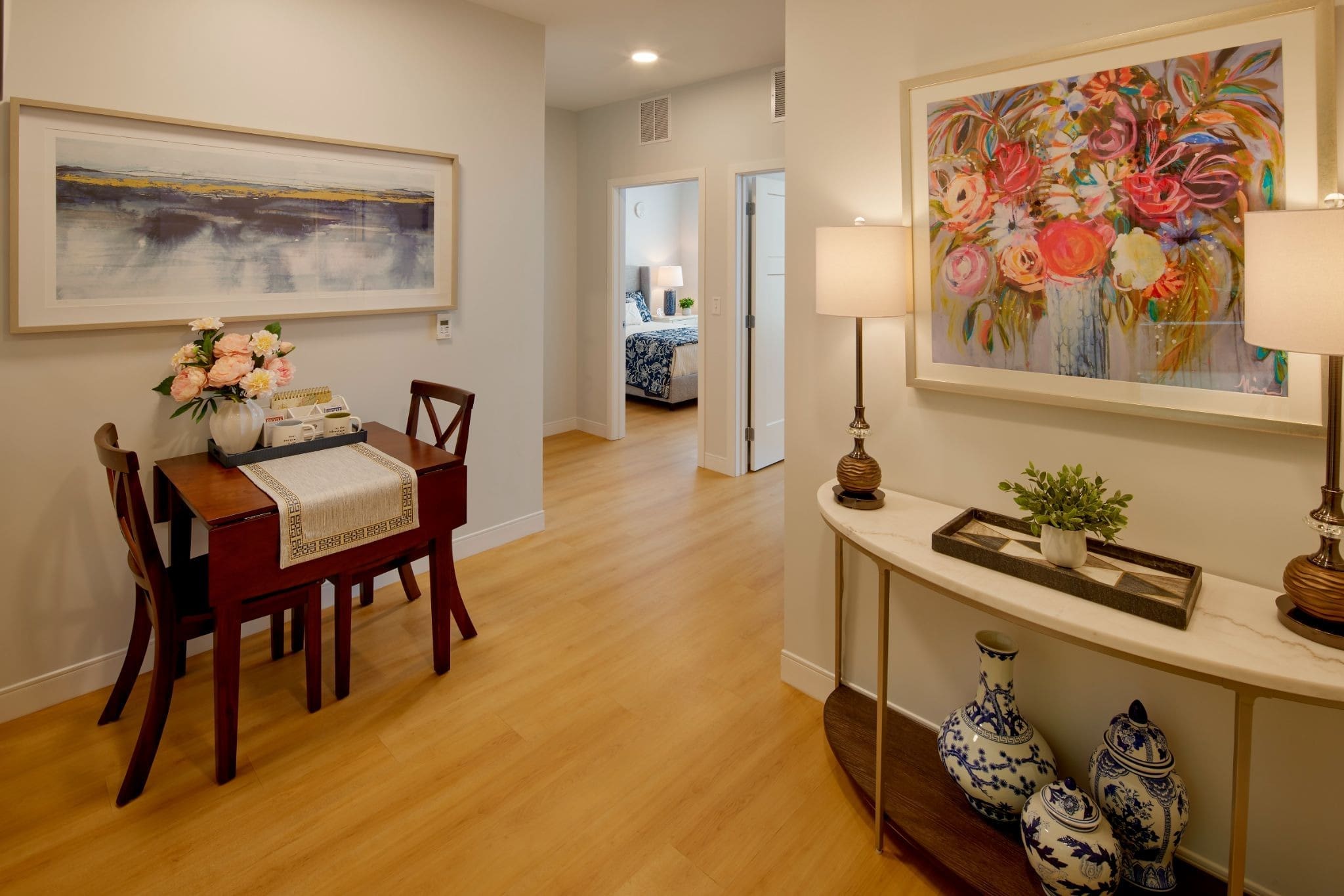
Private rooms are essential for emotional security, especially during transitions or moments of confusion. Personalized spaces promote dignity and cognitive stimulation. Personalized environments help reduce feelings of isolation. Personalized spaces enhance residents’ sense of identity and belonging. Personalized spaces enhance emotional well-being and reduce anxiety, while a room that feels personally meaningful supports both emotional and overall well-being.
At The Cordwainer, bedrooms can be oriented toward garden views or soft daylight whenever possible. Families are encouraged to bring personal photos, quilts, familiar objects, and meaningful objects. Personal touches like photos trigger memory and recognition. Personalized room identifiers enhance recognition and reduce anxiety.
A resident who loved the outdoors might have a favorite floral quilt, framed landscape prints, a safe display of garden gloves, and a comfortable chair near the window. These personalized spaces make it easier for residents to recognize their room and feel they belong.
Supporting Families and Staff Through Design
Memory care environments must work for families, staff, and residents. Courtyards, sunrooms, and living rooms with views provide low-stress places for families to visit a loved one without feeling confined to a medical setting.
For staff members, clear sightlines, intuitive layouts, and calm acoustics make it easier to support residents unobtrusively. Small-group living spaces and common spaces also allow staff to notice changes in mood, appetite, mobility, and engagement.
During a tour, families should be able to see how the physical environment supports dignity and resident safety: secure outdoor spaces, warm shared spaces, clear wayfinding, and design features that help reduce confusion without making the community feel restrictive.
What Families Should Look For in Nature-Inspired Memory Care Communities
When visiting memory care communities, look beyond décor. Ask whether the design truly supports daily life for older adults with dementia.
Look for:
- Abundant natural light without glare
- Genuine outdoor access to secure gardens or terraces
- Secure outdoor spaces with walking paths and shaded rest areas
- Calm acoustics, soft furnishings, and warm finishes
- Memory boxes, personal photos, and other visual cues
- High contrast at doors, handrails, bathrooms, and dining areas
- Natural materials and natural elements in both private and shared areas
- Sensory gardens, bird feeders, seasonal flowers, and activity spaces that invite participation
Notice the residents’ body language. Do they seem relaxed near windows and gardens? Are staff using outdoor spaces and indoor nature cues to reduce stress and encourage engagement? A thoughtfully designed space should feel peaceful, warm, and connected to nature.
Frequently Asked Questions
How exactly does nature-inspired design help someone with dementia feel less anxious?
Gentle, predictable sensory elements such as daylight, greenery, soft outdoor sounds, and natural textures provide familiar cues. These cues can reduce fight-or-flight responses, support orientation, and give restless energy a safer outlet through walking, sitting, or observing nature.
Is nature-inspired memory care design only possible in brand-new buildings?
No. Purpose-built senior living communities like The Cordwainer have the advantage of integrated design, but existing communities can still improve. Better lighting, indoor planting, warmer finishes, courtyard access, nature artwork, and safer garden routes can all strengthen inspired memory care.
How much time do residents at The Cordwainer actually spend outdoors or near nature each day?
The goal is multiple opportunities throughout the day, not one scheduled activity. Residents may spend time in courtyards, on patios, near sunny windows, or along secure walking paths depending on weather, preference, and ability. Staff can use fresh air, sunlight, and greenery for walks, visits, and calming routines.
Can families personalize a loved one’s space with their own nature-themed items?
Yes. Families can bring safe nature-related items such as framed landscape photos, favorite quilts, a cherished outdoor chair, or small display objects. Avoid toxic plants, heavy items that may tip, or anything that creates a tripping hazard.
How is The Cordwainer’s approach different from standard assisted living communities?
The Cordwainer is designed around memory care, so nature-linked wayfinding, secure outdoor access, sensory-aware interiors, and therapeutic gardens are part of the whole plan rather than afterthoughts. That integrated approach helps support residents with safety, dignity, comfort, and connection every day.