
For families in Massachusetts caring for someone with Alzheimer’s or another dementia, private memory care offers specialized support that care at home often cannot. A private memory care residence, sometimes called a private dementia care residence, combines a secure, homelike setting with 24/7 dementia-trained staff and structured daily programming. This guide explains the benefits, what to expect, the costs, and how to choose the right private memory care community, with a close look at The Cordwainer in Norwell, MA.
Key Takeaways
- Private memory care residences in Massachusetts combine specialized memory care, a homelike setting, and 24/7 support for people living with Alzheimer’s disease and other dementias.
- The Cordwainer, a family-owned, purpose-built private dementia care residence in Norwell, MA, was designed from the ground up for residents living with dementia.
- Families benefit from predictable, all-inclusive long-term care costs, coordinated health care, and relief from the daily demands of caregiving at home.
- These communities are certified by the Massachusetts Executive Office of Aging and Independence to provide secure, supportive environments tailored to individual cognitive needs.
- This article explains care levels, regulations, costs, and how to choose a residence, and includes a practical Q&A for families starting their search.
Understanding Private Dementia Care Residences in Massachusetts
A private dementia care residence is a specialized senior living community designed exclusively for adults experiencing memory loss from Alzheimer’s disease or related dementia. Unlike general assisted living or a traditional nursing home, these memory care communities feature secure environments, dementia-trained staff, and structured activity programs focused on cognitive engagement. Massachusetts is home to hundreds of senior living communities, and a growing number offer dedicated memory care for residents with significant cognitive needs.
Massachusetts regulates assisted living residences through the Executive Office of Aging and Independence, which oversees assisted living across the state. Many private dementia care residences operate as licensed assisted living with dedicated memory care neighborhoods. Every memory care residence in Massachusetts is required to provide a philosophy and mission statement that outlines its goals for supporting residents.
These residences serve adults typically 65 and older who need 24/7 supervision but not continuous hospital-level or skilled nursing care. Common services include help with daily living, medication management, meals, household support, and specialized cognitive programs.
Why Choose Private Memory Care in MA for Your Loved One?
If you’re weighing memory care options for a loved one, you understand the emotional weight of this decision. Caring for someone with dementia at home becomes increasingly difficult as the illness progresses, and many families reach a point where professional support becomes essential for everyone’s wellbeing.
A private memory care residence provides 24/7 specialized care, secure environments, and tailored activities. Key benefits of private memory care include:
- Safety and security through secured entrances and thoughtful wandering support
- Care teams trained specifically in dementia behaviors and communication
- Predictable routines that reduce anxiety for residents
- Social connection with other residents through meaningful daily activities
Private residences can ease the confusion, agitation triggers, and anxiety that large, loud institutional settings often cause. A well-designed residential model gives residents a sense of control and autonomy while using subtle safety measures to support those who tend to wander. For many Massachusetts seniors, a private dementia care residence provides a middle ground between aging at home with in-home care and moving to a long-term skilled nursing facility.
What Makes The Cordwainer’s Private Memory Care Unique?
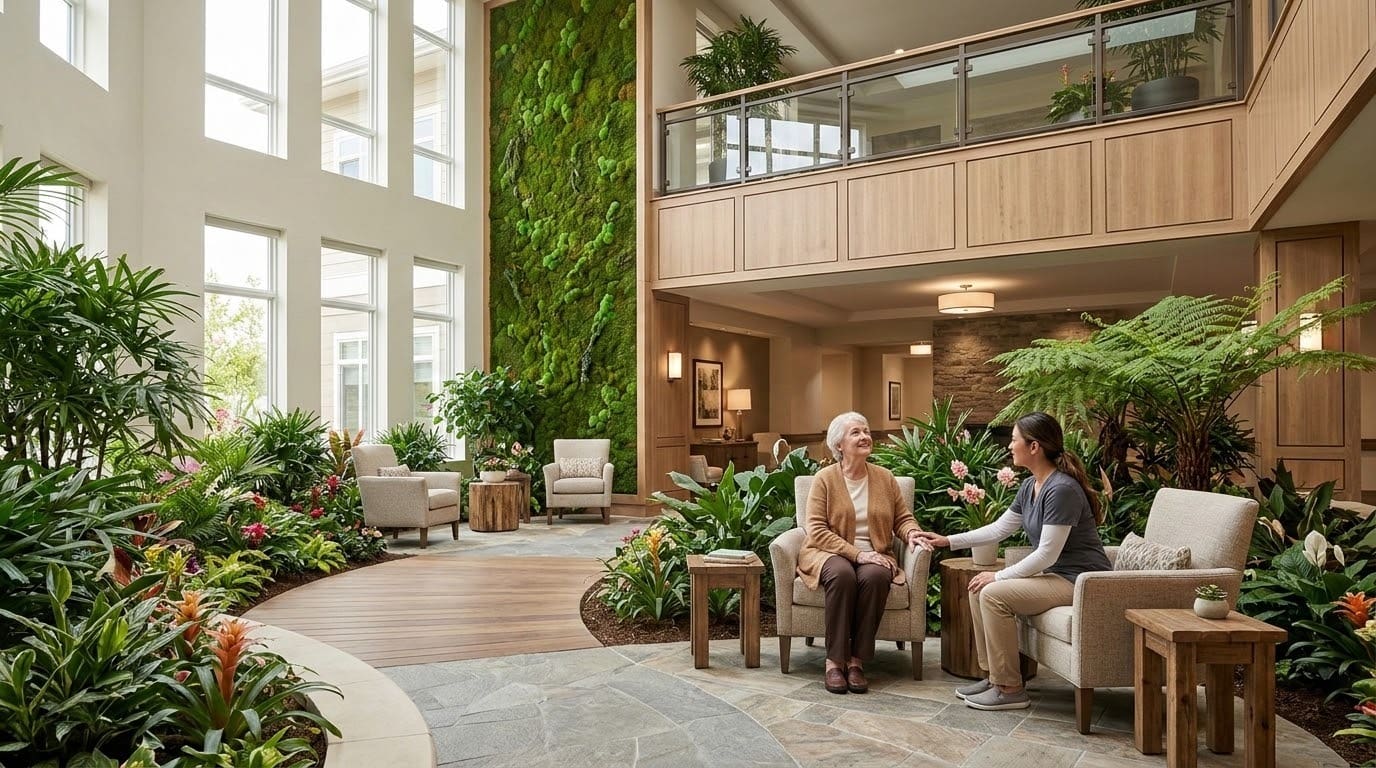
The Cordwainer is a modern, family-owned private memory care residence in Norwell, MA, serving families across the South Shore and Greater Boston. Founded by Bodo and Tamilyn Liesenfeld and opened in 2022, the community was purpose-built, with architecture and interiors designed from the ground up for Alzheimer’s and dementia care rather than converted from an existing assisted living building.
The design of memory care residences often includes dementia-friendly features such as easily navigated spaces and looping pathways with no dead ends. The Cordwainer takes this further with a two-story indoor sensory garden, a living moss wall, secure outdoor sensory gardens, abundant natural light to help ease sundowning, and calm color palettes that help orient residents.
What truly sets The Cordwainer apart is The Learned Environment℠, its signature programming framework built on three pillars: Music Immersion, Artistic Exploration, and Language Discovery. These daily experiences are designed to engage residents as whole people with histories and dreams, not simply to occupy time.
Unlike communities that mix memory care with large general assisted living populations, The Cordwainer focuses exclusively on dementia care. The residence provides private and companion suites, common living rooms that feel like home, and dining spaces designed to support residents who may have challenges with focus or appetite. Pricing is all-inclusive, so medication management, personal care, and programming are part of one predictable monthly rate rather than billed as separate add-ons.
Comprehensive Memory Care: Support for Every Stage of Dementia
Dementia progresses over time, and families in MA often need different levels of personalized care as the illness changes. A private dementia care residence adapts support to match each stage.
Early and mid-stage support includes:
- Cueing for daily living activities
- Help with medications
- Structured activities and gentle behavior support
- Engagement with other residents through social programming
Later-stage support includes:
- Full assistance with bathing, dressing, continence care, and transfers
- Coordination with outside healthcare providers, including neurologists and primary care physicians
- Support with hospice or palliative care decisions when appropriate
Memory care staff must complete additional training to serve people with dementia, including a minimum of 54 hours for those who assist residents with activities of daily living, plus at least two hours of training annually on supporting people who have Alzheimer’s or a related dementia. Before moving into a memory care community in Massachusetts, a resident is assessed by a nurse to determine needs and preferences, which informs an individualized service plan. The Cordwainer emphasizes continuity of caregivers to build trust and reduce agitation.
Daily Life in a Homelike Setting

A typical day at a private dementia care residence feels unhurried and familiar. Morning routines begin with gentle assistance, familiar music, and support with grooming and dressing tailored to each resident’s history and preferences.
Memory-focused programming includes activities aimed at supporting cognitive wellness. Sample daily activities include:
- Small-group art or music sessions
- Gentle exercise and movement programs
- Memory games and sensory engagement
- Supervised time in secure outdoor gardens
- Quiet spaces for rest
Memory care suites maximize natural light and familiar layouts to help ease sundowning. Meals are served in smaller, cozy dining rooms to reduce overstimulation, with menus reflecting New England tastes adapted to individual dietary needs. Spaces at The Cordwainer feel like a real home, with comfortable furniture, recognizable household objects, and calm color schemes.
Health Care Coordination and Safety Features

Health care in a private dementia care residence is coordinated rather than replaced. Residents keep their own physicians while receiving on-site support from trained staff and visiting medical professionals.
Massachusetts regulations require memory care communities to provide a secure outdoor area for residents who may be prone to wandering. Core safety features include:
- Secure entrances and exits with monitored outdoor areas
- Fall-prevention design elements
- Emergency call systems in resident suites and bathrooms
Massachusetts regulations do not specify required staff-to-resident ratios for memory care, but communities must be sufficiently staffed at all times, with at least two employees awake throughout the night. Staff who prepare meals or work directly with residents must complete seven hours of orientation and an additional ten hours of relevant training each year. The Cordwainer partners with local Massachusetts health care providers to bring services on-site when possible, and regular wellness checks, infection-control practices, and ongoing staff training reflect current best practices in senior care.
Costs, Coverage, and Financial Planning for Private Dementia Care in MA
Understanding memory care costs helps families plan ahead for long-term care in Massachusetts, and transparency matters. On the South Shore and across Greater Boston, memory care sits at the higher end of senior living costs, reflecting the region’s cost of living and the specialized, around-the-clock nature of dementia care. Premium, purpose-built memory care communities in the area commonly run well into the five figures each month.
The Cordwainer’s rate is approximately $14,500 per month, and it is all-inclusive. That is an important distinction: many communities advertise a lower base rate and then bill separately for medication management, personal care, and programming, so the headline number can be misleading. At The Cordwainer, those services are included in one predictable monthly fee, which makes long-term budgeting far simpler and avoids surprise charges as care needs change.
Payment options typically include:
- Private pay from savings or retirement funds
- Long-term care insurance policies
- VA Aid and Attendance benefits for eligible veterans
The Cordwainer is a private-pay community and does not offer low-income or MassHealth-subsidized suites, so families should confirm payment details directly. Medicare does not pay for room and board in a memory care residence but may cover certain medical services and therapies from outside clinicians.
Not sure how to plan for the cost of care? The Cordwainer’s Cost Readiness Quiz is a free, 3-to-5-minute tool that delivers a personalized memory care funding guide covering VA benefits, home equity, long-term care insurance, and more. Take the quiz at planning.cordwainermemorycare.com, and reach out to The Cordwainer’s team for a personalized cost breakdown and guidance on connecting with elder law or financial planning professionals.
How to Choose the Right Private Memory Care Community in Massachusetts
When touring communities across MA, including The Cordwainer, bring a checklist of key questions. The Executive Office of Aging and Independence publishes a free Consumer Guide that provides a helpful checklist for touring assisted living communities. You can obtain this free Consumer Guide online or from any Massachusetts assisted living community.
Questions to ask during tours:
- What training do staff receive in dementia care?
- What are the staffing levels, especially overnight?
- How are behavioral symptoms handled with dignity and compassion?
- What medical oversight and emergency procedures exist?
- Is pricing all-inclusive, or are care levels and services billed separately?
Private residences often avoid the strict, clinical visiting hours associated with traditional nursing settings, encouraging frequent family presence. Observe how residents and staff interact with residents, the cleanliness and feel of common areas, noise levels, and whether the environment truly feels like a homelike setting. Visit at different times (morning routines, lunchtime, and late afternoon), and consider location and access for family members across Greater Boston and the South Shore so loved ones can visit frequently and stay engaged in care decisions.
Q&A: Common Questions Families Ask About Private Memory Care in MA
When should we move from in-home care or general assisted living to a dedicated memory care residence?
Key signs include wandering behaviors, nighttime confusion, increased safety concerns, or caregiver burnout. In-home care offers one-to-one attention in a familiar setting, which can reduce the stress of a move. But when safety becomes the primary concern, or caregivers can no longer provide adequate support, a dedicated memory care community often becomes the right choice.
How long do residents typically stay in a private dementia care residence?
Length of stay varies based on the stage at admission and disease progression, often ranging from two to five years. Dementia care residences use specialized staff and purpose-built environments to deliver support beyond standard assisted living, and they care for residents through all stages, including coordination with hospice when appropriate.
How do families stay involved after a move?
Families participate through scheduled care conferences, visits, phone and video calls, shared meals, and activity programs. The Cordwainer works closely with families during the transition, including move-in planning, orientation, and frequent communication during the first 30 to 60 days. The community also offers a private family suite and on-site support groups to help reduce caregiver isolation. Your knowledge of your loved one’s life history remains essential to person-centered care planning.
Supporting Families and Caregivers Beyond the Residence
The emotional toll of dementia affects spouses, adult children, and other caregivers deeply. As a family-owned community, The Cordwainer understands this firsthand and offers resources including support groups, educational workshops on Alzheimer’s and other dementias, and one-on-one conversations with care team members.
The Cordwainer strives to be a long-term partner, providing daily care for the resident while offering guidance and emotional support for the family throughout the dementia journey. The community helps families navigate outside services such as hospice, palliative care, or specialized medical evaluations when appropriate. View memory care as a collaborative relationship: your knowledge of your loved one’s preferences, routines, and life story is essential to maintaining their independence and quality of life.
FAQ: Private Memory Care MA
What is the difference between private memory care MA and assisted living with memory support?
Standard assisted living provides general support for seniors who need help with daily activities but may not have the secured environments, specialized programming, or intensive staff training required for residents with significant cognitive decline. Memory care residences offer enhanced security, structured cognitive activities, and staff specifically trained in dementia behaviors.
Can couples live together if only one partner has dementia?
Many private residences accommodate couples when one partner has dementia and the other does not. The Cordwainer evaluates each situation individually to find the best arrangement that supports both partners’ needs while ensuring appropriate care for the person living with memory loss.
How can family members stay connected if they live outside Massachusetts?
The Cordwainer offers communication tools, including regular phone and video calls, care plan updates, and virtual participation in care conferences, so family members in other states stay aware of their loved one’s wellbeing and engaged in care decisions.
What happens if a resident’s health needs exceed what a private dementia care residence can provide?
If a resident requires continuous skilled nursing or hospital-level medical care beyond the residence’s scope, the care team works with the family to bring in additional care beyond the services offred or coordinate for a safe transition to an appropriate higher level of care, maintaining the dignity and comfort of the resident throughout.
How do I learn more about The Cordwainer?
Contact The Cordwainer directly to schedule a tour and get detailed, personalized answers about your loved one’s situation. The team can provide a site visit, discuss the all-inclusive cost transparently, and help you determine whether this memory care community is the right fit for your family. You can also explore insights, FAQs, and videos in the online Resource Hub.